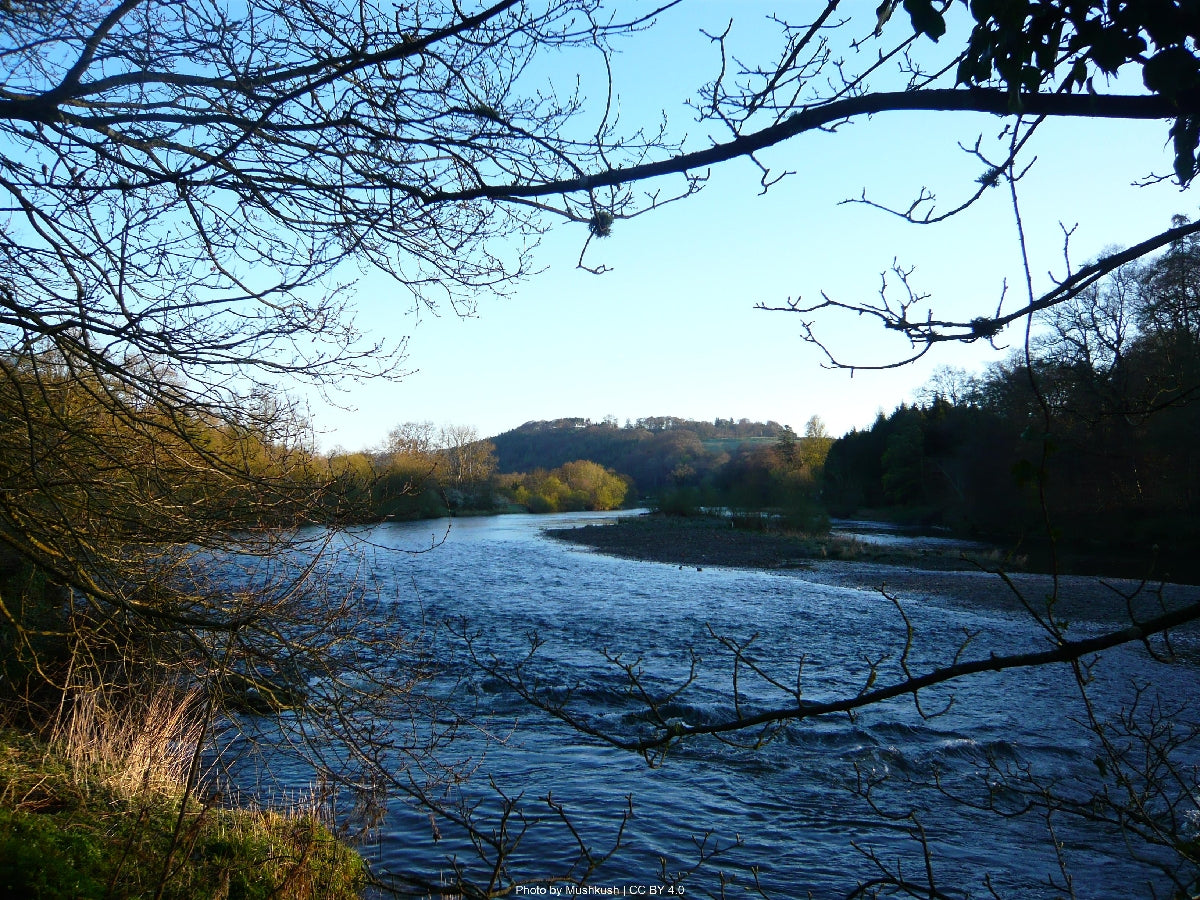
St Cuthbert's Way

Melrose, Scottish Borders, Scotland → Holy Island (Lindisfarne), Northumberland, England

Distance 100km | 62 miles
Ascent 2,500m | 8,200ft
Duration 2–5 days
Best time April to October
Difficulty
  • Historic pilgrimage across two countries
  • Diverse landscapes, moderate difficulty
  • Spectacular coastal finale at Holy Island
Build your trip

See the Trail

Why people love the St Cuthbert's Way

St Cuthbert's Way is a captivating 100-kilometer (62-mile) trail that crosses the Scottish-English border, following the life journey of Saint Cuthbert, a 7th-century monk who later became one of northern England's most revered saints. This thoughtfully designed route links Melrose Abbey in the Scottish Borders, where Cuthbert began his religious life, to Holy Island (Lindisfarne) off the Northumberland coast, where he served as bishop and was eventually buried.

The trail traverses a remarkable variety of terrain including rolling hills, peaceful riverside paths, open moorland, and coastal plains, with a moderate cumulative elevation gain of approximately 2,500 meters (8,200 feet). What sets St Cuthbert's Way apart is its rich historical tapestry, combining religious heritage, archaeological sites, and medieval landmarks against the backdrop of the beautiful border country between Scotland and England.

Unlike many pilgrim routes that can be heavily trafficked, St Cuthbert's Way offers a more contemplative experience with manageable daily distances. The dramatic final crossing to Holy Island across the tidal causeway or pilgrim's path provides a fitting conclusion to this journey, though timing is crucial due to tidal restrictions. The trail is accessible enough to be tackled by moderately experienced hikers with reasonable fitness levels.

Build Your St Cuthbert's Way Adventure

Choose your pace, package and group size — we'll do the rest.

1

Choose Your Pace

2

Adjust Your Pace

3

Choose Your Package

Itinerary Only

£119

One-time payment

Perfect for independent travelers

  • Custom door-to-door route
  • Full app access with door-to-door route, on trail support and weather updates
  • Trail book with your day-by-day itinerary detail plus tips for a brilliant adventure
  • Accommodation list to book where you need it

Best for: DIY hikers who want to book their own accommodation

Most Popular

Standard Tour

£786 per person

£1,572 trip total

Premium experience with extra comfort

  • Personlised Adventure Plan and route to follow in our app
  • Hotels & B&Bs with breakfast included
  • Baggage transfer included
  • Full app access with door-to-door route, on trail support and weather updates
  • Trail book with your day-by-day itinerary detail plus tips for a brilliant adventure

Best for: Those who want maximum comfort and convenience

4

How Many Are Going?

For groups of more than 4, email us to discuss options.

Your Adventure

Duration 7 days / 6 nights
Daily Distance ~14 miles/day
Party Size 2 people
Package Basic Tour

What's Included:

  • Hostels & bunkhouses booked
  • Breakfast included
  • On-trail support
Per person: £624
Trip total: £1,248
Deposit today: £100

£352 per person £703 trip total
4 days~16 mi/day

Your Adventure

Duration 7 days / 6 nights
Daily Distance ~14 miles/day
Party Size 2 people
Package Basic Tour

What's Included:

  • Hostels & bunkhouses booked
  • Breakfast included
  • On-trail support
Per person: £624
Trip total: £1,248
Deposit today: £100

Get Expert Advice

Your Trip Configuration

Trail: St Cuthbert's Way
Duration: 7 days / 6 nights
Party Size: 2 people
Package: Basic Tour
Est. Total: £1,248

Your Details

How Should We Contact You?

Questions or Special Requests

0 / 500

We'll get back to you within 2 hours during business hours

Loading map...

Sample Itinerary

Here's what's on the trail. We'll split the stages to each day just right for your pace.

Stage 1: Melrose to St Boswells/Maxton

12km 375m 350m

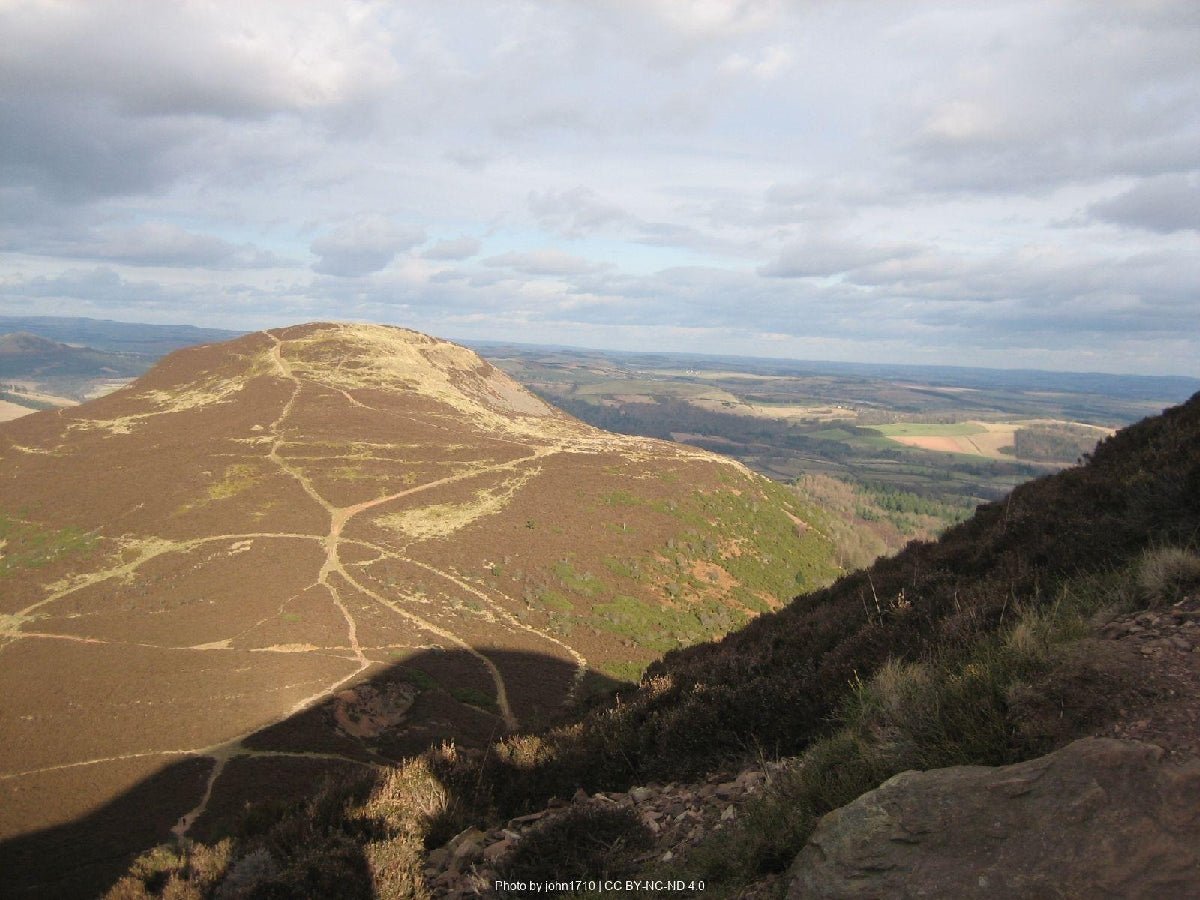
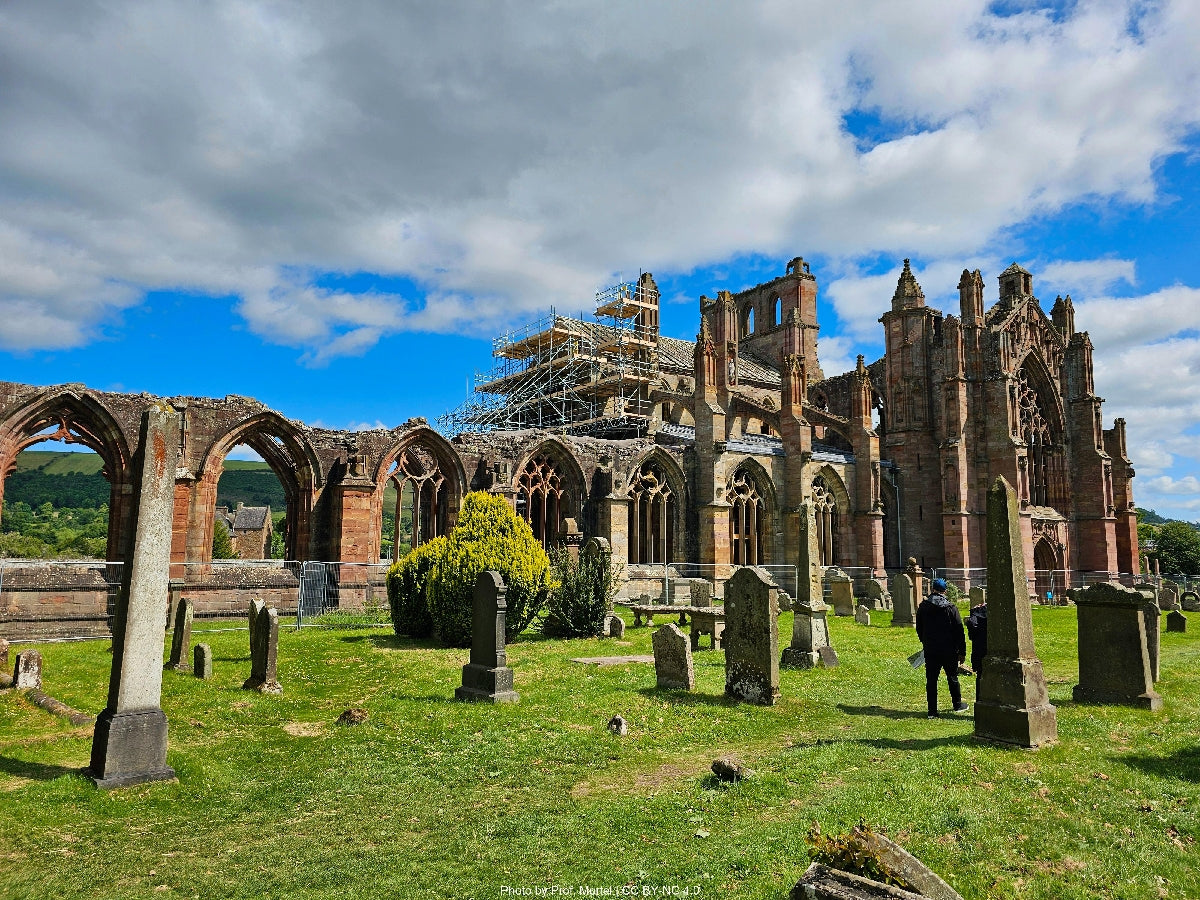
The journey begins at the impressive ruins of Melrose Abbey, founded in 1136 by Cistercian monks where St Cuthbert began his monastic life. From the abbey, the trail climbs steadily through woodland to the prominent Eildon Hills, specifically passing between Mid and North Eildon. This ascent offers your first panoramic views across the Scottish Borders landscape. At 422m, the Eildon Hills represent the highest point on the entire route and were once the site of a significant Roman fort called Trimontium.

The path descends through mixed woodland before joining the banks of the River Tweed, one of Scotland's premier salmon rivers. Follow the riverside path through peaceful meadows, watching for kingfishers, otters, and heron along the water. The trail passes Dryburgh Abbey, another magnificent ruin with connections to Sir Walter Scott, who is buried in its grounds. Water is readily available in villages, and the River Tweed flows alongside much of this section.

Cultural highlights include Melrose Abbey (where Robert the Bruce's heart is said to be buried), the Eildon Hills' association with Thomas the Rhymer folklore, and Dryburgh Abbey. This stage concludes in the village of St Boswells or nearby Maxton, both offering accommodation and resupply opportunities.

Stage 2: St Boswells/Maxton to Morebattle

22km 510m 425m

Departing St Boswells, the trail follows the course of Dere Street, an exceptionally well-preserved Roman road that once connected York to Scotland. This straight, historic pathway offers relatively easy walking with subtle rises and falls. Look for ancient milestone markers and remnants of Roman engineering along this section. The trail then skirts the village of Ancrum before climbing gently to Lilliard's Edge, named after a legendary female Scottish warrior who fell fighting the English in the Battle of Ancrum Moor in 1545.

From the ridge, expansive views unfold across the border country. The path then descends to cross the River Teviot and passes through mixed farmland and woodland patches. A gradual ascent leads to Grubbit Law and its prehistoric fort remains before the trail descends to Cessford Castle, an imposing 15th-century ruin that was once a stronghold of the powerful Ker family. The crumbling red sandstone structure makes an excellent rest spot.

The final stretch into Morebattle passes through gently rolling countryside with views toward the more dramatic Cheviot Hills ahead. Water sources are available in villages and at occasional streams. Morebattle itself is a charming village offering accommodation at the Templehall Inn or nearby B&Bs, meals, and a small shop for limited resupplies. The village name reflects its ancient past – 'Morebattle' derives from Old English meaning 'settlement by the lake.'

Stage 3: Morebattle to Kirk Yetholm

11km 500m 480m

This shortest yet most challenging stage features a sustained climb and traverses the most remote section of the entire route. Leaving Morebattle, the trail begins with a steady ascent up Grubbit Law (374m) through open farmland. The climb continues over several undulating hills including Wideopen Hill (368m), marking the halfway point of St Cuthbert's Way and offering spectacular 360-degree views. On clear days, you can see the Eildon Hills behind you and glimpse the North Sea ahead.

The path crosses windswept moorland covered with heather and gorse, requiring careful attention to waymarking in poor visibility. This section offers the route's most remote and wild experience, with the landscape seeming little changed since St Cuthbert's time. Red grouse, curlews, and even golden eagles might be spotted here. Water sources are limited on the higher ground, so carrying adequate supplies is essential.

The trail eventually begins its descent toward Kirk Yetholm, a small village famous as the terminus of the Pennine Way, Britain's oldest long-distance footpath. The Border Hotel traditionally offers free pints to Pennine Way completers, and now welcomes St Cuthbert's Way walkers too. The village has significant connections to Roma and Traveller communities who historically gathered here, and the village green once hosted annual fairs. Accommodation options include the Border Hotel, hostels, and B&Bs.

Stage 4: Kirk Yetholm to Wooler

22km 550m 590m

This stage crosses the England-Scotland border and transitions from the Cheviot foothills to the gentler Northumberland landscape. From Kirk Yetholm, the trail climbs gradually to the border ridge at White Law (324m), marked by a wooden boundary gate. Take a moment here – you're walking between two nations, following a route that people have traveled for centuries despite changing political boundaries.

After crossing into England, the path descends through Elsdonburn and enters Northumberland National Park. The trail passes College Valley, a private estate with restricted vehicle access, making this area particularly peaceful. The route traverses the northern edges of the Cheviot Hills, through a mixture of rough pasture and conifer plantations. Near Hethpool, look for the rare Chillingham Wild Cattle in the distance – Britain's only wild cattle, unchanged for over 700 years.

The path follows the River Till before climbing to Tom Tallon's Crag, offering expansive views across the Northumberland plain toward the coast. The final approach to Wooler passes through farmland and woodland. Wooler, the largest settlement since Melrose, offers multiple accommodation options, restaurants, shops, ATMs, and a medical center. As the "Gateway to the Cheviots," Wooler has long served hikers and shepherds alike, with the 16th-century Black Bull Inn remaining a popular stopping point.

Stage 5: Wooler to Holy Island (Lindisfarne)

33km 565m 655m

The longest stage begins with a gentle climb out of Wooler to St Cuthbert's Cave, a sandstone outcropping where monks supposedly rested with St Cuthbert's body while fleeing Viking raids in 875 AD. The cave's interior bears centuries of carved inscriptions from previous pilgrims. The trail continues through Kyloe Woods, a refreshing stretch of coniferous forest, before emerging to offer the first views of Holy Island and the North Sea.

The path descends to the coastal plain through farmland dating back to medieval strip farming systems. Near Fenwick, the trail passes the impressive ruins of 13th-century Fenham Tower. The final approach crosses flat marshland to the coast at Beal, where decisions must be made regarding the Holy Island crossing. The causeway road (3km) is accessible only during low tide, with tide tables posted everywhere. Alternatively, follow the historic Pilgrim's Path marked by poles across the sand and mud (also tide-dependent). Crossing times must be carefully planned – the tide comes in quickly, and numerous vehicles are lost each year by attempting unsafe crossings.

Holy Island itself offers a fitting culmination to the journey. Visit the evocative ruins of Lindisfarne Priory where St Cuthbert served as bishop, and Lindisfarne Castle perched dramatically on a volcanic plug. The island features unique flora including rare orchids in the dunes, and abundant birdlife in the adjacent Lindisfarne National Nature Reserve. Water sources are available in villages and at Holy Island. The island has several accommodation options, but advance booking is essential due to limited capacity and high demand, especially during summer months.

Essential Travel Information

The ideal period for walking St Cuthbert's Way is from April through October. Spring (April-May) offers abundant wildflowers, nesting birds, and fewer tourists, though with potentially muddy sections after winter. Summer (June-August) provides longest daylight hours and generally stable weather, but accommodations require advance booking due to peak tourism. Autumn (September-October) features beautiful foliage colors and fewer crowds, though daylight hours shorten noticeably.

Weather in the Borders region can change rapidly in any season. Average temperatures range from 8-18°C (46-64°F) during the walking season, but prepare for both hotter days and near-freezing nights. Rain is possible year-round, with heavier precipitation typically in autumn. Wind exposure on higher sections can be significant, particularly on Wideopen Hill.

Winter walking (November-March) is possible but not recommended due to short daylight hours, potentially dangerous weather conditions on exposed sections, and limited accommodation availability as many providers close seasonally. Snow occasionally affects higher sections, particularly near the Cheviots.

The most critical seasonal consideration is Holy Island tidal access. Tide tables must be carefully checked regardless of season, as the causeway is submerged twice daily. Never attempt crossing during incoming tides.

St Cuthbert's Way offers diverse accommodation options, though advance booking is essential during peak season (June-September):

B&Bs/Guesthouses: The most abundant option (£50-90 per night), found in all main stopping points. Many offer packed lunches and luggage transfers. Popular options include Burts Hotel in Melrose, Templehall Inn in Morebattle, and Lindisfarne House on Holy Island.

Hotels: Limited to larger settlements including Melrose, Wooler, and Holy Island. Expect to pay £80-150 per night. The Eildon Tree Hotel (Melrose), Border Hotel (Kirk Yetholm), and Black Bull Inn (Wooler) are trail favorites with hiker-friendly facilities.

Hostels/Bunkhouses: Budget options (£20-35 per night) available in Melrose, Kirk Yetholm, and Wooler. Some require membership of hostel associations. Most popular is Kirk Yetholm Friends of Nature House, specifically serving long-distance walkers.

Camping: Limited official sites exist along the route. Wild camping is legal in Scotland with proper etiquette but illegal in England without landowner permission. Campgrounds include Melrose Gibson Park, Kirk Yetholm Campsite, and Highburn House Country Holiday Park near Wooler.

Holy Island accommodation requires earliest possible booking (6-12 months ahead for summer stays) due to extremely limited capacity. Many walkers spend their final night in Fenwick or Beal on the mainland, crossing to Holy Island as a day trip.

Airports: Edinburgh Airport (75km/1.5 hours from Melrose) offers the most convenient international connections. Newcastle Airport (97km/1.5 hours from Holy Island) provides an alternative, particularly for return journeys.

Rail: The nearest train station to Melrose is Tweedbank (4km away), the terminus of the Borders Railway from Edinburgh (journey time approximately 1 hour). From Holy Island, the nearest station is Berwick-upon-Tweed (23km) on the East Coast Main Line, with direct services to Edinburgh, Newcastle, and London.

Bus Services: Borders Buses operates services to Melrose from Edinburgh and Galashiels. The Borders Buses 67 route serves most villages along the Scottish section. In Northumberland, Borders Buses 267 and Arriva X15 connect Wooler and Berwick. Note that rural bus services can be infrequent, particularly on Sundays.

Trailhead Access: Melrose is easily reached by public transport. The trail starts at Melrose Abbey in the town center.

Return From Holy Island: Critical timing consideration due to tides. Borders Buses operates services from Holy Island to Berwick-upon-Tweed, but these are scheduled around safe causeway crossing times. Taxi services from Holy Island to Berwick station should be pre-booked (approximately £30).

Emergency Evacuation: Mobile phone coverage is generally good except in the more remote sections between Morebattle and Kirk Yetholm. Bailout points with public transport access include St Boswells, Morebattle (limited service), Kirk Yetholm, and Wooler. The most isolated section is between Kirk Yetholm and Wooler, where evacuation would likely require contacting emergency services or a pre-arranged taxi.

A 10-day circuit of the Anglesey Coast Path represents a relatively affordable long-distance walking option compared to premium European routes.

Accommodation costs (daily averages):

  • Budget approach (camping/hostels where available): £25-40 per person
  • Standard approach (mix of B&Bs/guesthouses): £70-90 per person
  • Premium approach (hotels/quality guesthouses): £110-150 per person
  • Transportation expenses:

  • UK rail travel to/from Holyhead: £30-120 depending on advance booking
  • Local buses for resupply detours: £2-4 per journey
  • Taxi services for baggage transfers: £15-25 per stage
  • Food and supplies:

  • Self-catering/picnic approach: £15-25 daily
  • Café lunches with evening pub meals: £30-45 daily
  • Restaurant dining: £45-70 daily
  • Water: Freely available at regular intervals
  • Additional fees:

  • Baggage transfer services: £8-12 per bag per stage

  • Attractions (optional):

  • Beaumaris Castle: £9.50
  • Penmon Priory: £3 (parking charge)
  • South Stack Lighthouse tours: £6.50
  • Total 10-day budget estimates:

  • Budget approach: £550-750 per person
  • Standard approach: £950-1,250 per person
  • Premium approach: £1,400-1,900 per person
  • St Cuthbert's Way sees moderate traffic compared to more famous routes like the West Highland Way or Hadrian's Wall Path. Approximately 3,000-4,000 people walk the complete route annually, with highest numbers in July and August.

    Peak Season (July-August): Expect to encounter 10-15 other hikers daily. Accommodation requires booking 3-6 months in advance, especially in smaller villages with limited options.

    Shoulder Seasons (May-June, September): A pleasant balance of reasonable weather and fewer crowds, typically seeing 5-10 other walkers daily. Booking accommodation 1-2 months ahead is advisable.

    Off-Season (October-April): Very quiet, with potentially days between encountering other hikers. Limited accommodation availability as some providers close seasonally.

    The trail attracts a diverse demographic: approximately 60% British walkers (many from Scotland and northern England), 30% European (particularly German and Dutch hikers), and 10% international visitors. The age profile leans toward 45+ with good representation of church groups and history enthusiasts. Solo hikers, couples, and small friend groups are most common, with larger organized groups relatively rare.

    For maximum solitude, consider hiking mid-week during shoulder seasons and starting early in the morning. The most social sections tend to be around Melrose and Holy Island, while the stretch from Morebattle to Kirk Yetholm often offers the greatest solitude.

    Cultural considerations include respecting the religious significance of sites along the route, particularly Melrose Abbey and Lindisfarne Priory. Holy Island maintains a contemplative atmosphere despite tourism, and keeping voices lowered around the priory ruins is appreciated. When crossing farmland, close all gates and keep dogs leashed during lambing season (spring).

    More specific requirements?