Words: Rob Savin
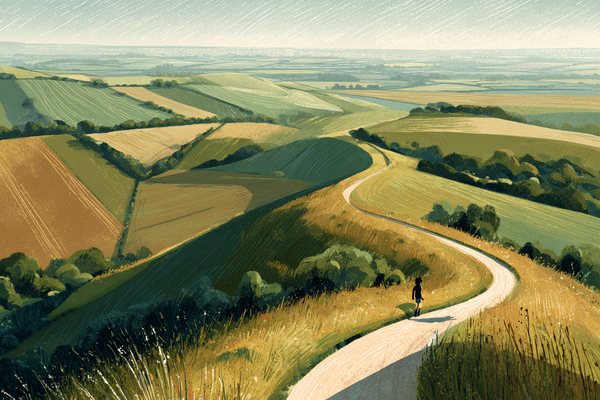
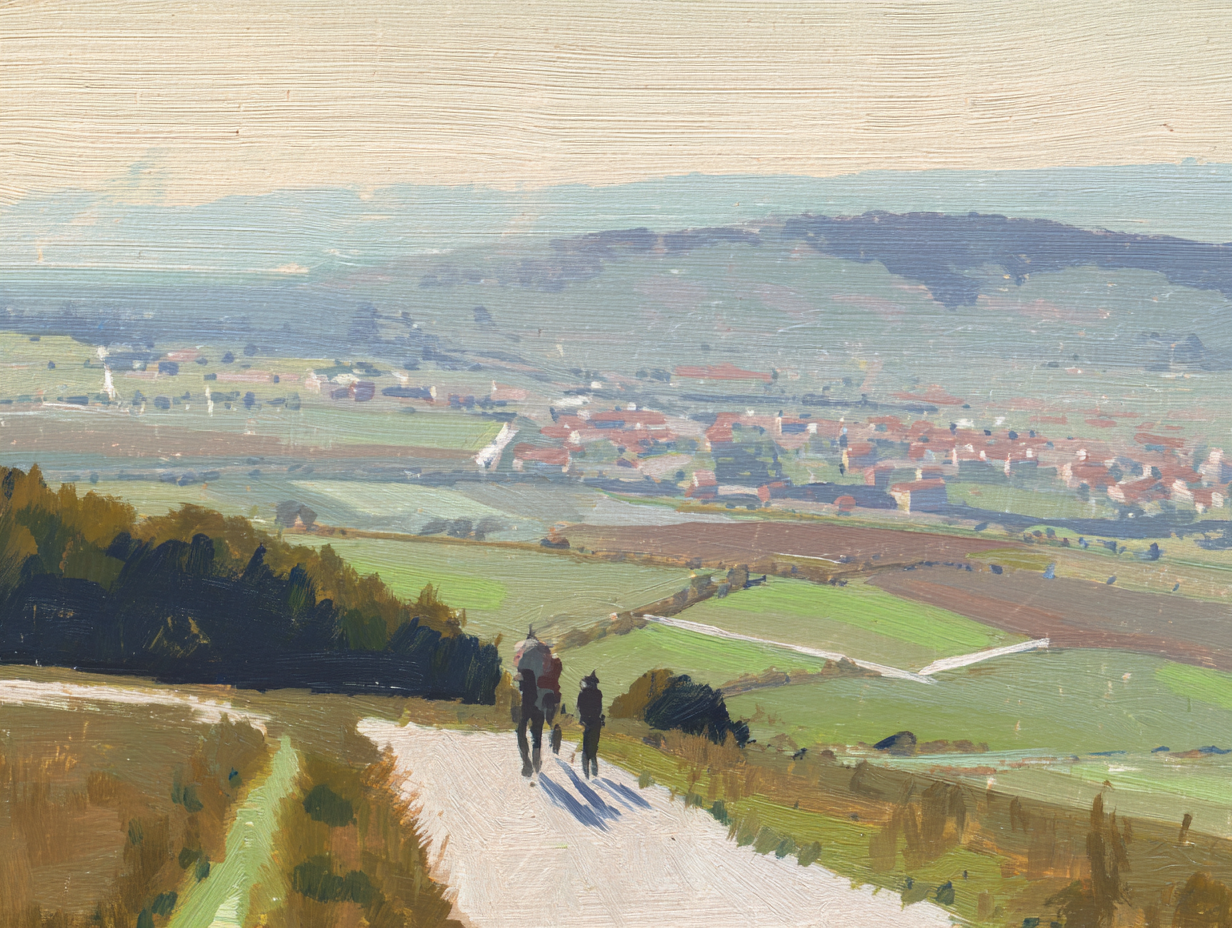
Somewhere in the Vosges Mountains, in the northeast corner of France, Ryel Kestano and his children crossed from one side of the range to the other over two or three days. They came in from the west — roads, noise, the edge of a city — pushed up into the forest, and came out the other side into somewhere quieter and older. No one else on the trail. No human-made sounds at all. Just the family, moving through it.
He tells me this near the end of our conversation, when I ask him which section felt like the epitome of the whole thing. He doesn't reach for the Alps. He doesn't talk about scenic payoff. He talks about the Vosges. The remoteness. The bench in the middle of a forest that no one had planned on. The way the descent brought them somewhere slightly different from where they'd started, in a way that's hard to explain but isn't really about geography.

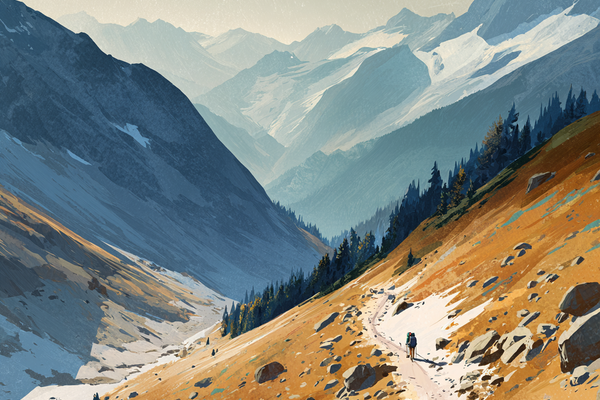
The GR5 runs nearly 1,500 miles from the Dutch coast all the way down to Nice. Most people who've heard of it know the southern section — Lake Geneva to the Mediterranean, through the French Alps, the kind of scenery that earns its place on a magazine cover. The northern half, through the Netherlands, Belgium, Luxembourg and into Alsace, barely registers. It's flat in places. Populated. Emphatically not the headline.
This is, Ryel tells me, part of the appeal.
He and his oldest son started near Rotterdam in the summer when the boy was twelve. There was meant to be a monument at the trailhead. There wasn't — construction had taken it down. Anticlimactic in the way that actual beginnings often are, rather than the ones you'd imagined. So they found the start on a maps app, made a little video, and walked twelve or thirteen miles. Three weeks later, they were in Luxembourg. They left shells on the trail — carried from the beach in the Netherlands — so they could find the exact spot the following year.
I find I need a moment with that detail. Shells from the coast, carried through two countries, buried at a pause point. Proof of something.

Ryel grew up hiking. Long stretches in the American wilderness, tent and sleeping bag, the full thing. When he had children, he started taking them out early — short trips in Colorado, incremental distances, building them up without them quite realising it. The first proper trail was the West Highland Way, when his two oldest were nine and ten. One hundred miles through the Scottish Highlands. Comfortable accommodation each night, not a bad place to start. They did well. Enjoyed it. The door opened.
By the time his son was asking for something more ambitious, they were ready for the GR5.
I ask him what he's actually chasing — what it is about taking his kids into difficulty that matters to him. He thinks about it carefully. Life, he says, throws unpredictable challenges at people. If you've already chosen to face hard things — voluntarily, with enough preparation, in a context you can manage — you build something. A kind of confidence that lives in the body, not just the memory. An actual log book entry: I thought I couldn't do that. Then I did it. It happened.
His son is sixteen now. They're talking about bigger things.

The family dynamic on the trail is something I want to understand. At home, Ryel says, quality time gets squeezed into the margins. School, homework, activities, screens, the ordinary churn of it. Out on the trail, you're together every moment. Not performing togetherness. Actually in it.
That can mean deep conversations — life, planets, whatever comes up. Or it can mean miles of silence, each of them lost in their own world, present to the same landscape without needing to narrate it to each other.
I ask him which day he'd go back to, if he had the chance. He doesn't hesitate long. Last year's section, near Beaufort in the Savoie, all three kids on the trail with him. Somewhere during that stretch, they'd been composing a rap song — each of them responsible for a line, working on the rhymes over days. One afternoon, everyone had memorised their verse. They sang it through, back to back, while Ryel recorded it.
He laughs telling me this. It's clearly not the answer he expected to give when I asked the question.
"Yeah, that was super cool."
· · ·
They're around 950 miles down. This summer they'll reach Lake Geneva. The Alps — the scenic headline, the part that's on the posters — waits for next year. He's in no particular hurry. There's something he values about walking the trail almost no one else walks. Over four years, they've met perhaps three or four other people doing the whole thing. In a world engineered to give you an audience for everything, that kind of anonymity has its own weight.
The GR5 will still be there. So will the kids, for now. He'll keep going south.