Three miles from the finish line, Mel Sykes fell and ripped her borrowed chest pod (a front-facing pack to store essentials on very long runs) . She had been running for the better part of 125 hours. She had crossed the Cheviots in the dark. She had hallucinated tigers. She had spent two hours on a toilet floor in Horton-in-Ribblesdale at the point of hypothermia. She had cried for six hours on Cross Fell for no particular reason, as you sometimes end up doing when you've been awake for two days.
And with Kirk Yetholm in sight, her primary concern was that her friend Jim was going to be annoyed about the ripped pod.
She took it off three miles out and hid it behind a parked car - a priority, clearly. She ran through the finish line without it. Jim, it turned out, was not annoyed. He simply repatched it and still uses it.
"It's just weird, isn't it?" she says. "You get all that way."

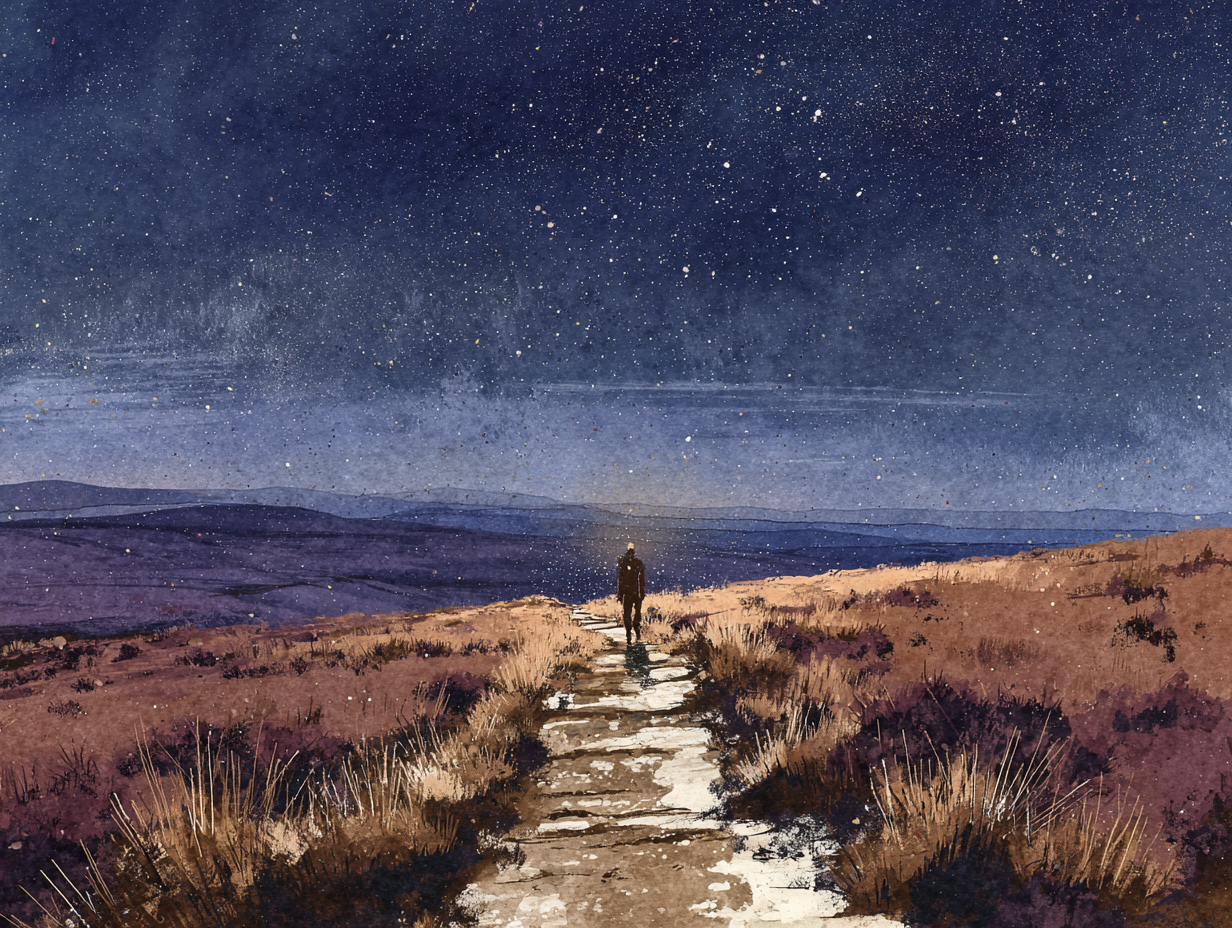
The Winter Spine Race runs the full 268 miles of the Pennine Way, non-stop, in January. In January there are eight hours of daylight. The rest — the bogs, the navigation, visits to checkpoints up to 60 miles apart — happens in the dark, the circle of light from the head torch the only thing you can see for a large part of the race. Of the 150 or so who start, a high proportion do not finish. Mel finished in 125 hours.
Eighteen months before the race, she had brain surgery. A Chiari Malformation — a condition requiring decompression surgery at Leeds Hospital. She hadn't been sure she'd make the start line. Finishing was a different order of certainty entirely.
She'd been watching the Spine from the roadside since she was a girl — grew up just off the Pennine Way, used to go up to Wessenden Head to watch the runners come through at 30 miles in and wonder how any of them could possibly have another 238 miles left in them.
Now she knows.
The First Two Days
It snowed. Deeply and continuously. The field was diverted off Pen-y-ghent because the summit was unsafe, and by the time Mel arrived at the Hawes checkpoint at 3am on the Tuesday — 110 miles in — she had been wet through for two days. At Horton-in-Ribblesdale she was cold enough that the safety team made her wait. Two other competitors came through and, eventually, the three of them set off together into the night.
She says this without drama. The safety team considered pulling her from the race but, in her own head, she was never dropping out.
She had recce'd the whole route before she entered. She is clear that she couldn't have done it any other way — not because the trail is technically complex, though navigation across the boggy, unflagged, largely signpostless stretches is genuinely difficult, but because knowing what was coming meant she could file each section into its correct category of hard. Boring-hard. Tiring-hard. The long empty dark between checkpoints, which is a category of its own.
· · ·
After around 48 hours, the emotions start arriving uninvited. She'd read about this happening. She cried for six hours somewhere above Cross Fell, she thinks on day three, without being unhappy. The body has been running on emergency systems for long enough that the usual gatekeeping falls away and things just come through unchecked. She wasn't sad. She couldn't stop.
She rang race HQ twice, convinced she was lost, while moving in the correct direction on a straight track. The woman on the phone told her to keep going straight. She kept going straight, not quite believing it. She saw tigers. She looked at her watch and felt certain she'd been moving for hours, but the watch only showed 0.1 of a mile had passed. She tried to recognise what was happening, which is the most you can really do, and kept moving.
The food she actually wanted, by day four, was hot food. Each aid station had a meal. Between aid stations, she was running on packet mash, pasta, a rotating supply of sweet and savoury things from the chest pod, none of it quite right but all of it necessary. She never had what she actually wanted at the moment she wanted it. That is, she thinks, just part of the Spine.
The Man With the Boxes
Somewhere before Hadrian's Wall, Mel crossed a road in the dark and found a man restocking plastic boxes beside it. The boxes said "for Spiners" on the side. He was a local man, nothing to do with the race — he drove past this spot twice a day, to work and back, and every time he stopped to refill the boxes with biscuits, sweets, paracetamol, all bought from his own money. He was there when Mel crossed, and he had a flask of coffee which he offered her.

She also mentions the flapjacks — left in boxes on walls by people who have no connection to the race beyond living near it and wanting to help. And the woman near Alston who opened her house to runners passing through, and was sitting having tea with her husband when Mel arrived, and made toast.
These things, in the state you're in at mile 200 of a non-stop winter race, land differently than they would anywhere else, received even more gratefully than they would be otherwise.
· · ·
At Hadrian's Wall, the sun came out. It was day three or four and shad passed halfway. The wall runs east-west and runners follow it until the Pennine way turns north again. There is a particular feeling at that corner — the knowledge that everything south of you is already done, that you are genuinely, measurably moving towards Scotland. The DNF rate drops sharply after Hawes. By Hadrian's Wall it is close to zero.
Mel thought: I'm going to finish.
The Cheviots were crossed alone, in the dark, looking at the head torch circle. Twenty hours, maybe, between the last checkpoint and Kirk Yetholm. She came down into the village, crossed the green, hid the chest pod — and ran through the finish.
In the pub afterwards she felt fine, sat down, took her socks off. Her ankles swelled to twice their size. Getting up after two hours was difficult. She went on holiday to Fuerteventura the following week, because she knew that at home she would try to do things. The physical recovery took three weeks. The full recovery — the fatigue, the residue of it — took three or four months.
For two or three weeks after finishing, she kept waking in the night convinced she needed to put her shoes on. Convinced she was at a checkpoint, that she had to get up and keep moving north.
Mel is going back in January. She says she doesn't quite know yet what she'll do differently. Probably just be more efficient at the checkpoints. Probably just get in and out faster rather than spending six hours there for 90 minutes of sleep.
Once more, she says, before noting that some people say that then do it twelve times.