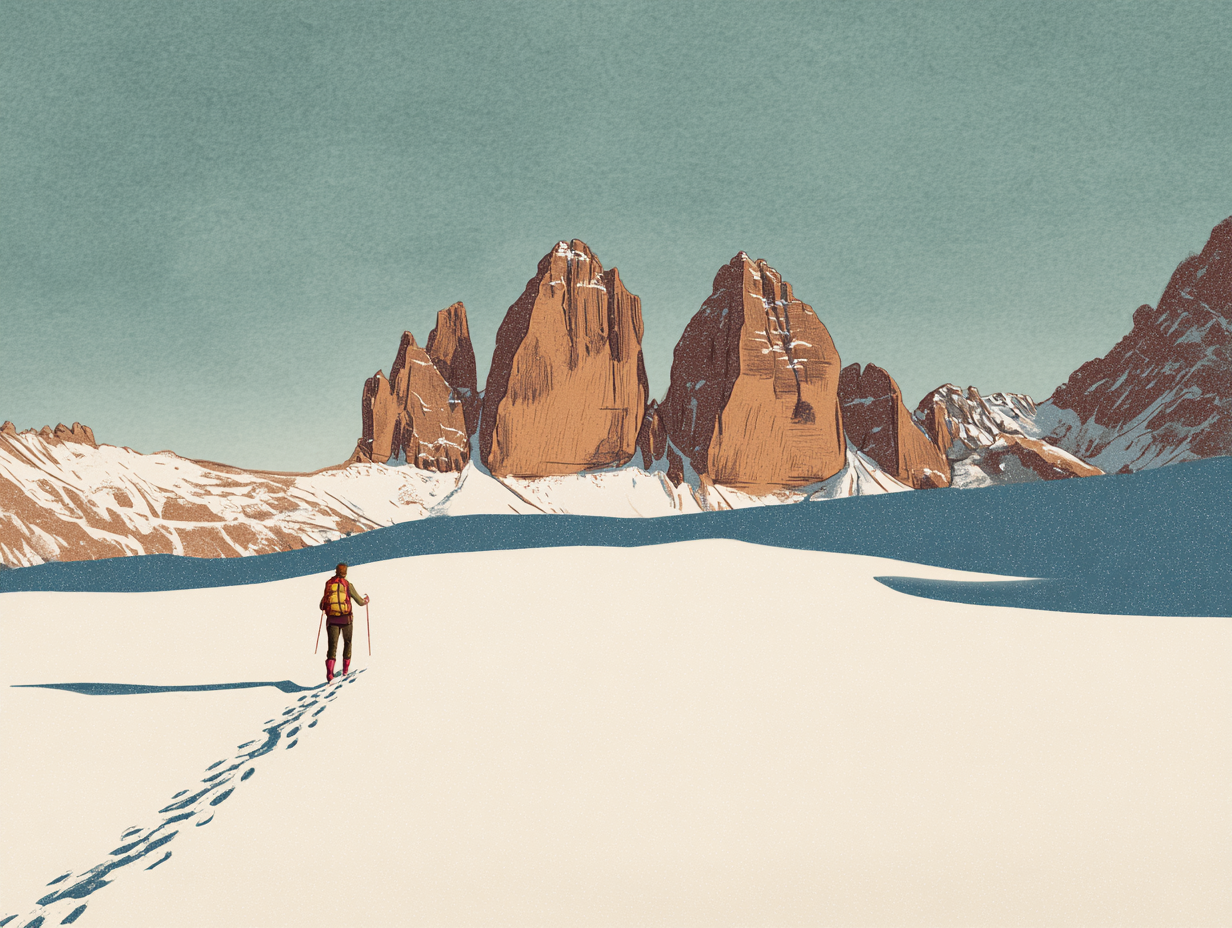
The mountain guide had been watching her lace up her shoes. He came over when she started attaching her microspikes, clearly having been waiting for the right moment to intervene. She was wearing a 20-litre running vest and heading out into five days of fresh Dolomite snow, alone. He looked at the vest and asked where the rest of her kit was.
She showed him what she had. He inspected it. Then he told her she wasn't going to make it to her hut that evening. He told her it was irresponsible to be out in those conditions at night. He told her to come with him — down into the valley, onto the bus, up by gondola.
Hannah said no.
She'd done 38 kilometres the previous day. She knew the conditions and she had bailout plans. She also, she tells me, doesn't particularly like being told what to do.
"I know my capability better than you know me," she'd said, or words to that effect.
She went out into the snow. She made the hut, just as she’d known she would. And three days later, at a refuge at 3,000 metres, having hot chocolate with two South American men she'd befriended the night before, she watched the same guide walk through the door with his group, fresh off the gondola.
She put her buff down so he could see her face.
Oh my God, you made it?
Yeah, I made it.
Where are you going today?
She told him. He said she wouldn't get there.

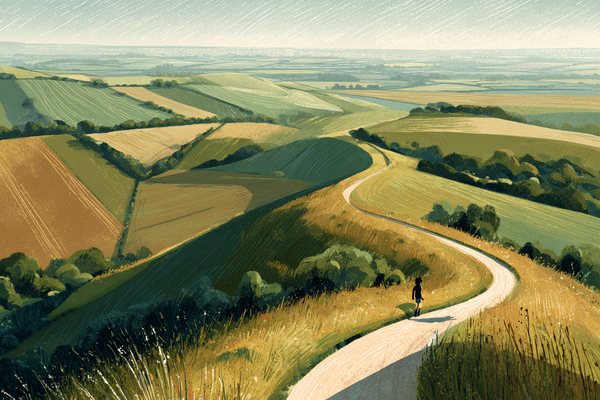
The trail is called Der Traumpfad — the Dreamway. It starts in the centre of Munich and ends in the centre of Venice, roughly 550 kilometres of mountain and valley and hut culture running south through Bavaria, Austria, and into the Italian Dolomites. Hannah flew into Munich, took the train down to Bad Tölz — a small Bavarian alpine town she describes as stinky and stunning in the same breath — spent one night there, and started hiking the next morning. She finished in Belluno, at the base of the Dolomites, 15 days and 450 kilometres later.
She had a meticulous spreadsheet. She shared it with her parents and her partner before she left — not just her itinerary, but best-case and worst-case timings for each stage, notes on which accommodation she'd already paid for, and a column for notes about the terrain expected. If she was going to be significantly diverted, she'd make contact. She also carried a Garmin InReach Mini, a satellite tracker, so that even without phone signal, she could send a message. She'd taken out alpine club membership for the mountain insurance. She'd read the Cicerone guidebook. She'd been watching the webcams for weeks.
The weather in August had been, she says, unseasonably spotless. She was not expecting snow.
The Weather
The first two days were 28 degrees and perfect. Warm rock, late summer sun, cowbells ringing in the valley pastures. Then she noticed that the farmers were bringing the cows down early. In the mountain huts, people told her that the rain coming at the weekend wasn't going to be just rain. She filed the information and carried on.
First came two days of rain. Then nine days of snow. Not a dusting — five feet of it on the Julian Alps above Innsbruck, where six people died in the mountains the day she made the decision to wait it out and reroute by train. She sat in Innsbruck for an extra day, watching weather webcams, watching the temperature drop, watching the snow accumulate at elevation. Hannah found this genuinely frustrating — the valley was fine, the sun was almost out, and she was twiddling her thumbs in a city while her trail sat waiting.
She went into town and bought microspikes. On the walk back, the temperature dropped 14 degrees in the time it took her to cover a few kilometres. She was not wrong to wait.

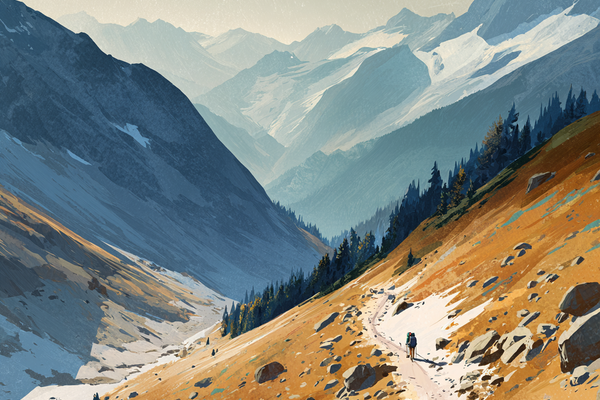
When she picked the trail back up, it was covered in snow. The trail, and Hannah, stayed snowy for another six or seven days. By then the storm had passed, the skies had cleared, and the snowpack had settled into something beautiful — bluebird days, cold and white and still, some of the best conditions she's ever moved through. Slower going, but she's insistent it was gorgeous. She sounds like she means it.
· · ·
The kit list, for two weeks and 450 kilometres through the Alps, was: one 20-litre bag, full waterproofs, a pair of shorts, a pair of leggings, two T-shirts, a few pairs of pants and socks, a satellite tracker, a first aid kit, a head torch, microspikes, and a small down jacket.
And Elizabeth Arden eight-hour cream.
She tells the next story with visible pleasure. The freak cold had dried out her skin completely — lips, hands, face — and the eight-hour cream was the only thing that worked. She was handing it round the mountain huts. Grown men in the Refugio Pueas were sniffing it and declaring it incredible. It comes everywhere with her now.
Every item in the bag, she says, has to earn its place. The cream thoroughly earned its place.
Running Her Own Rhythm
She started the trail and picked someone up halfway through day one — another walker, a good one. He spent two days with her. At the end of those two days, she found herself wanting to be alone again.
This is not a complaint about her companion. It's more about moving to your own rhythm. This is one of the real things that long solo trips give you, Hannah says — not loneliness, not even solitude exactly, but the simplicity of making every decision yourself, fixing every problem on the spot, without consultation. She's been building towards this for years: solo runs on the West Highland Way, the Pembrokeshire Coast Path, big days out in the British hills. The trust you develop in yourself across those years is what made the harder moments on Der Traumpfad manageable. Not arrogance. Not dismissing the mountain guide's concern. Just a clear-eyed knowledge of what she's capable of.
"I trust my opinion a hundred times more than I trust someone else's opinion of me," she says. It doesn't land like bravado, rather like a security she has earned.
I ask her what made her choose this particular trip, this particular year. She's quiet for a moment.
Hannah has cystic fibrosis. When she was born, the projected life expectancy for someone with CF was 32. She turned 32 the year she ran the Dreamway. That's why she did it that year, in that year specifically — as a way of marking the distance between the prognosis she was handed at birth and the life she was actually living.
She talks about movement not as something she does for her health, though the health benefits are real, but because she loves it. Where it takes her. What she sees. The rest — the fitness, the lung function, the whole machinery of a body kept active — follows on from that.
The Last Day
Hannah’s last day on the trail saw the first good weather in eleven days. Hot and sunny, like it had been at the beginning. The trail runs downhill for almost its entire final stretch, and she ran all of it.
Coming back into Belluno, she found herself disoriented in a way she's been trying to describe accurately ever since. She uses an analogy: hearing aids, and what happens when someone who has been living without amplification suddenly has everything turned up. The rush of noise. The time it takes to recalibrate. Coming in from fifteen days in the mountains — where animals make themselves small and quiet and you have to pay attention to catch them; where nothing, nothing at all, is trying to take your focus — into a town with traffic and crowds and phones and noise felt like that. Everything, everywhere, all at once.

She found it overwhelming. She also found it clarifying, in the way that re-entry always is: the contrast makes the thing you've come from suddenly legible in a way it wasn't quite while you were in it.
She'd like to go back. Not to do it again — though she would do it again. But to a specific hut she saw near the end: a tiny white building with blue shutters, set in an amphitheatre of rock above Belluno, where a group of men on a lads' holiday were spending five days doing via ferrata and having what appeared to be the time of their lives.
She sat with them for the evening in her down jacket and shorts, drinking a beer, watching the view, aware that her adventure was nearly behind her and ordinary life was ahead. She thought about turning around and doing the whole thing in reverse.
Hannah thinks she could have.