He arrived at Rowchoish Bothy one day to find 42 glass bottles. He put them in two large shopping bags and carried them four and a half miles back to the car. By the time he got there, he could barely lift his arms.
Richard Newsome tells me this without complaint. Rubbish breeds rubbish, he says — if people see mess, they think mess is acceptable, and if you want the bothy to stay good, you must keep it good. He has been the Maintenance Officer at Rowchoish for 12 years. He has never once walked through the door and thought about stopping.
"It's my passion," he says, simply. "I love doing what I do."

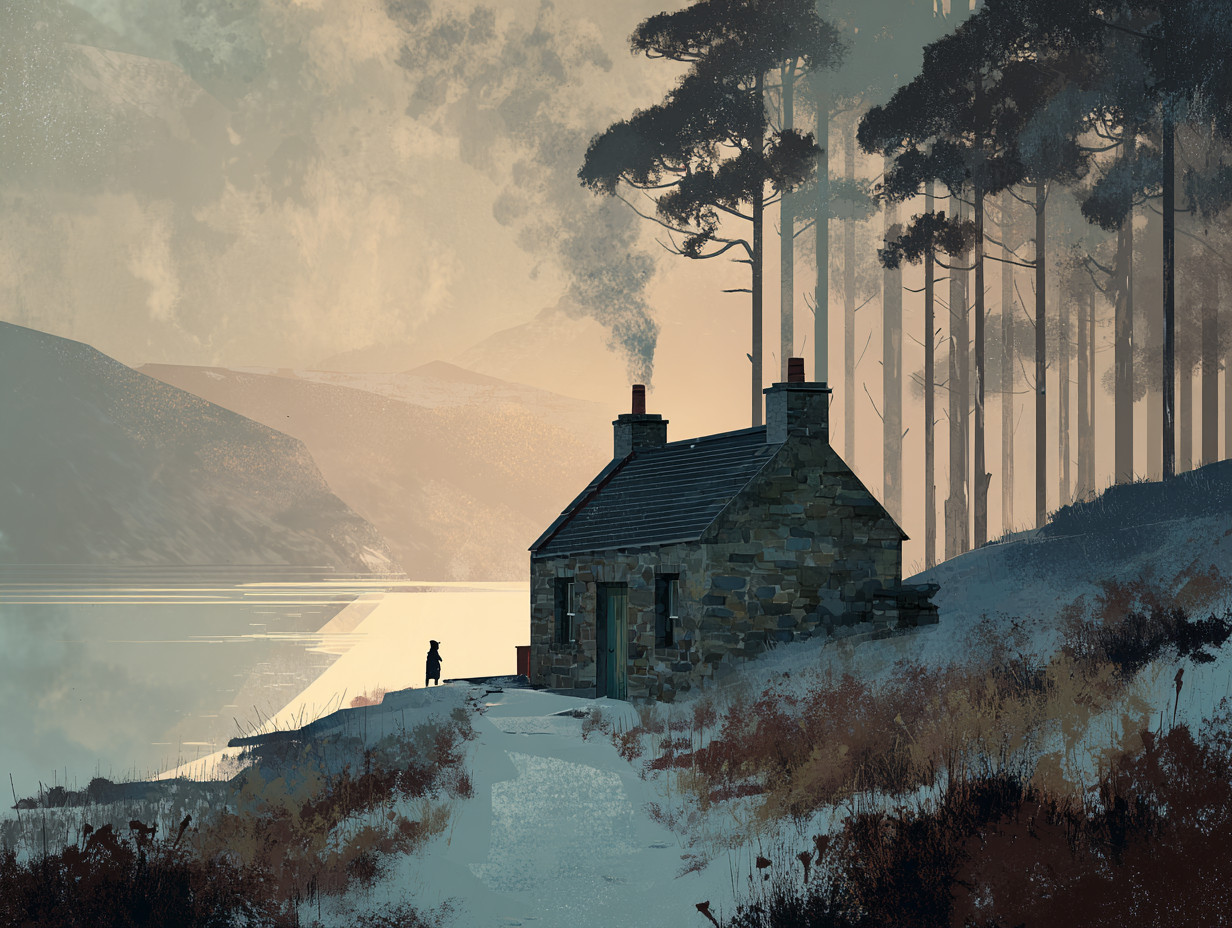
Rowchoish is the busiest bothy in the Mountain Bothies Association's Southwest Highlands and Islands area — a vast patch running from the Road to the Isles down into the Central Belt of Scotland on the western side. It sits on the West Highland Way, and walkers arrive from all over: Germans, Czechs (the West Highland Way is, for reasons Richard hasn’t yet discovered, particularly famous in Czechia), Americans, Australians, people from places he hadn't expected. He has been in there with 20 people at once. You always make room, he says.
The MBA's motto is maintaining buildings for those who love wild and lonely places. Rowchoish in summer is wild but not especially lonely. In winter it's different — eight hours of daylight at most, darkness from quarter past four to half past eight the next morning, snow on the path, ice on the ground, and a fire that needs feeding for longer than most first-timers realise. Some young men came up from the south of England one winter, got into serious difficulty with the cold, and pulled wooden panels from the wall to keep the fire going. They apologised in the bothy book. Richard gives them credit for the apology.
He always warns winter visitors: pack more wood and coal than you think you need. Take a book. Understand what darkness means at this latitude.
Why the Bothy Book Matters
Every bothy has a visitor book. When one fills up, Richard takes it out and replaces it, and they are kept on record. Reading them, he says, you can almost feel what people were experiencing when they wrote. The relief of arriving soaked after torrential rain comes through in the handwriting. The excitement of a first night in a bothy. The gratitude at finding it.
Some entries are funny. The most famous in bothy folklore, which Richard has never seen himself but which has achieved legendary status: "Arrived at the bothy and it's just me. Then the Swedish ladies' naked volleyball team walked in."
He checked a bothy book from another property and found: "It was so cold, even the mice had ice skates on."
The bothy books are also a research resource. A friend who looks after another bothy nearby has a scientist husband, and they go through the books extracting data: how many people visited alone, how many in groups, how many stayed overnight, how long. This strikes Richard as an excellent use of the information, and he mentions it with quiet pride, the way you do when something you care about turns out to be more valuable than people realise.
The Burns Night
The memory he comes back to first is a Burns Night at Rowchoish. He brought haggis, neeps and tatties. There was a trio from Czechia — he pauses to check the name, wanting to get it right — and one of them had brought a small book of Burns poems. They ate and drank and read the poems out from the wee book, strangers around a bothy fire on the 25th of January, doing exactly what Burns Nights are for.
"That was a great night," he says. "That was a great night."
Another time, he arrived once to find a man curled up on the floor. The man had eaten something that disagreed with him, been sick, leaned on a tree stump to steady himself, missed, and struck his chest. He had broken three or four ribs and been there for five hours by the time Richard arrived. Richard called the emergency services, described the grid reference, coordinated the response — a lifeboat from Luss, an air ambulance that landed on the other side of the hill as a precaution. Before the man was transferred onto the boat, Richard put his name, address and phone number in the man's wallet. Then he took the man's dog home. The dog became a celebrity on the school run.
The man got out of hospital a week later, told Richard he'd saved his life, said his wife would be his best friend and that Christmas presents would follow. Then he collected the dog and got on the train.
Richard never heard from him again.
"Doesn't matter," he says. "The main thing is he was okay."

Richard didn't set out to be an MBA volunteer. He walked the West Highland Way in 2004, in a difficult year — a relationship had ended, things at home were hard, he and his friend Darren needed to get out of town. They had a week of no rain and met some people from Greenock who invited them back to theirs. Richard met his wife Joanne there. He moved to Scotland the following year and has been there since, married for 19 years now, two teenage daughters.
When he was offered the chance to look after Rowchoish — on the West Highland Way, the trail that brought him to Scotland — it felt like the right thing. Full circle, he says.
He got involved with the MBA after stumbling on Greg's Hut on the Pennine Way — a bothy at 2,800 feet on Cross Fell, appearing out of nowhere in terrible weather, a young couple inside who had just stayed the night. He was hooked immediately. Nine years later he put his name forward.
What Maintenance Actually Looks Like
He visits Rowchoish six or seven times a year in a normal year, ten times this year. A typical visit means checking the bothy book, tidying, getting the fire going to burn what can be burned, carrying out what can't. He cuts fallen pine trees into logs, roughly 100 feet of wood per visit when he can get it. He has put up guttering that took him ages to get right, and about which he is proud. He has painted window frames at a bothy five miles from Cape Wrath Lighthouse with a steady hand and no masking tape.
The hardest part is vandalism: a firework once discharged up the chimney and bent the cowl; sections of roof damaged by things he'd rather not imagine. These repairs require scaffolding, ladders, multiple return visits. He deals with it without rancour. There will always be a minority who ignore the rules. The response is to fix things as quickly as possible, because damage encourages more damage, and to keep the standard high enough that most people who arrive feel moved to maintain it.
He is not naive about any of this. He is also not, in twelve years, discouraged.

For someone visiting a bothy for the first time, Richard’s advice is not to be scared. You walk up to the door. It looks like someone might live there. You worry about disturbing them. Look for the small circle on the door with the MBA symbol. Open the shelter, go in, make full use of it.
That's what it's there for. Someone has been up, cut the wood, carried out the bottles, got the gutter to hang at the right angle. That person might have been Richard.
The fire is yours to light.