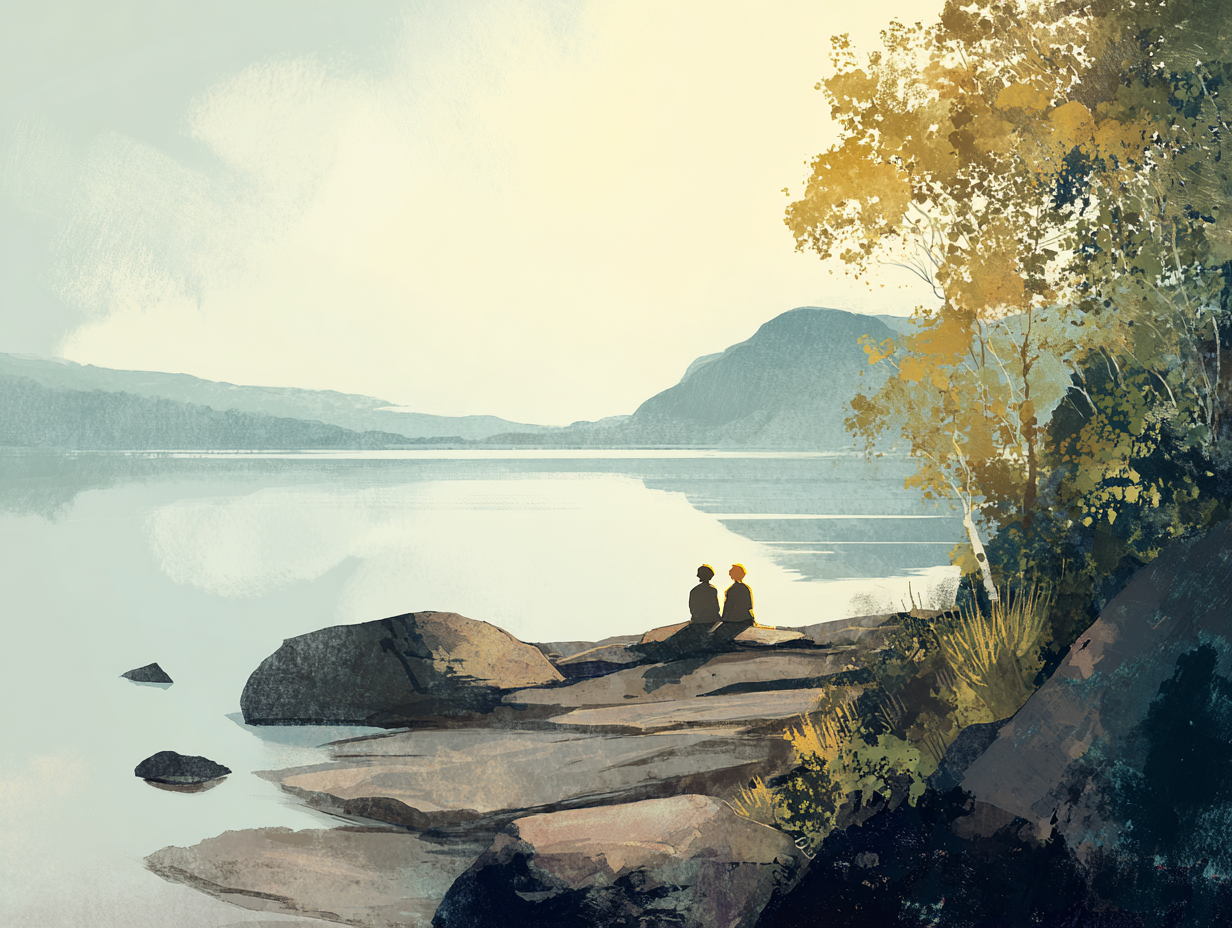
Marco said he couldn't really kneel on the rocks. Then he showed her the ring.
They were on a quiet stretch of the Loch Lomond bank on day two, just the two of them, trees behind them and the loch in front. They had been going to swim — that was the plan — but Sara had got only as far as her feet in the water before the cold convinced her otherwise. They were sitting on the rocks, drying off, not talking about anything in particular, when Marco produced the ring.
They happily walked the rest of the way to that night's accommodation. When they arrived, the owner came to the door with two pints of beer. He didn't know. It was, Sara says, perfect timing.

Sara grew up in Italy, grew up hiking — the kind of hiking that means reaching a summit with family as a child and then spending the rest of your adult life trying to recreate those achievements. She had fallen in love with Scotland years before the West Highland Way, drawn by exactly the things that make most Italians puzzled about their compatriots: the overcast weather, the chill, the particular quality of light on a grey day. She wanted to connect with the place rather than just visit it, then she found the long trails.
The West Highland Way was the obvious choice. She and Marco had done hiking before, but nothing multi-day, nothing with bags on their backs, nothing that required planning accommodation across a week. This was their first time doing anything like that.
She did not fully appreciate what that would entail until they were in it.
Day One, Day Two
The first day out of Milngavie is quiet — relatively flat, still near civilisation, nothing too wild. Sara was patient. The second day they reached Loch Lomond, and something changed.
She had been a little obsessed with Loch Lomond before the trip — the songs, the associations, the way a place can acquire significance before you've been there. When the water came into sight she felt the particular pleasure of arriving somewhere you've imagined, and it living up to those imaginations. To Sarah, the loch signified that they were really doing this, really in Scotland, really walking the West Highland Way.
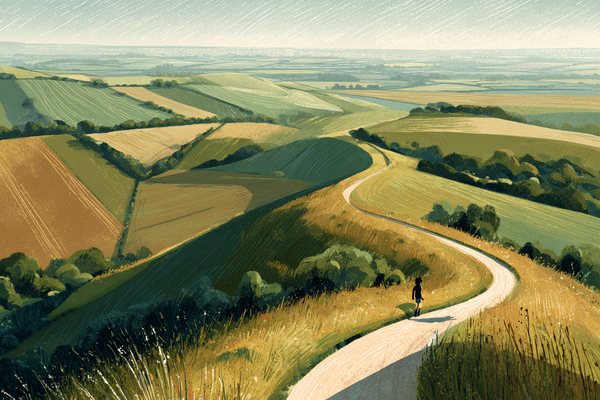
From there the trail changes steadily. Villages give way to woodland, woodland gives way to the open valley of Glencoe — mountains on both sides, nothing in between, no shade, just the path and the hills and the sky. Sara had expected rain and cloud and cool temperatures. Instead, she got seven consecutive days of 24 to 26 degrees and no rain at all. She found this, she says with complete seriousness, a bit of a disappointment. It was too hot in the open sections, brutal without shade, and not at all the Scotland she had come for. The overcast days she'd been hoping for never came.
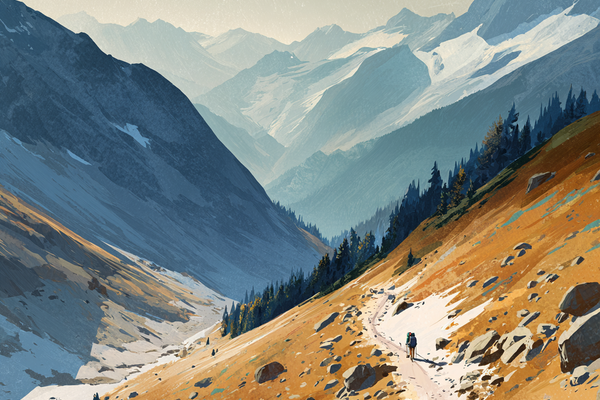
Her favourite section was Rannoch Moor and the stretch from King's House toward Glencoe — the climb out of the valley, the views opening up, the landscape becoming something else entirely. She had anticipated my question about favourite sections and still couldn't quite answer it cleanly because every part was beautiful. But Glencoe was where something clicked.
The Bag Problem
They started with their full bags. They’d planned it this way — two experienced hikers, sensible people, they would carry their own kit and that would be fine. But by the middle of the trip, they were exhausted, those heavy bags taking their toll.
The baggage transfer service changed everything. They used it for the second half of the trail and Sara describes the difference as game-changing. The lesson, filed carefully for next time, is that even a light pack is heavier than it seems when you've been carrying it for six days, and that pride in self-sufficiency has a point at which it stops being worth it.
She also wishes she had brought a second pair of shoes. Not for hiking but for the evenings. By day four, the prospect of putting hiking boots back on to walk to the pub was nauseating, she says.
This is her specific advice to anyone planning the trail. Everyone tells you to travel light. Sara tells you to pack the spare shoes.

They met almost nobody. This surprised her — she had heard the West Highland Way could be crowded, had prepared mentally for queues at stiles and busy huts, and found instead that they saw perhaps eight walkers over the whole week. The effect of this was to make the trail feel private in a way she hadn't expected. The same two or three people would reappear across consecutive days, and you would learn something about them and they about you, and then the trail would separate you again.
The hospitality they received was consistent and warm. The B&B owners seemed to genuinely want to tell you things - about their accommodation, about Scotland, about the trail.. One kept them talking for a couple of hours about how he'd built his bothy and the problem of pine martens getting into things. Sara describes this with delight. It is a significant part of what the West Highland Way gives you — not just the landscape but the people at the edges of it, who understand the place in ways that no guidebook captures.
The steak pie in Crianlarich was the best thing she ate. It’s clearly a standout memory amongst the many cheese sandwiches that came before and after.
What She'd Do Differently
The planning needed more attention in the later stages. As the trail moves into Glencoe and beyond, options for accommodation narrow significantly, and the distances between stops become less flexible. At one point Sarah and Marco realised they had inadvertently set themselves up for a 40-kilometre day — not feasible, not what they wanted — and caught a short train to rejoin the route further along. She doesn’t see this as a failure. It was simply solving a problem. They had planned for exactly this kind of contingency, and knew the transport options at each stage.
The last day into Fort William was 24 kilometres and felt, she says, absolutely crazy. They had completed it. Sarah says she would have started the whole thing again the next day if she could.

People often say things like this, but Sarah means it literally. She says it twice in our conversation: if I had the possibility, I would walk the West Highland Way again tomorrow. Not because it was easy — it wasn't — and not only because Marco proposed on day two beside the loch. But because the trail gave her something she hadn't quite found any other way: a real connection with a place, rather than a visit to it. The culture, the landscape, the traditions, the people, the particular quality of Scottish light on the hills. All of it, available only on foot.
That's what she went looking for. That's what she found.