How fit do I need to be?+
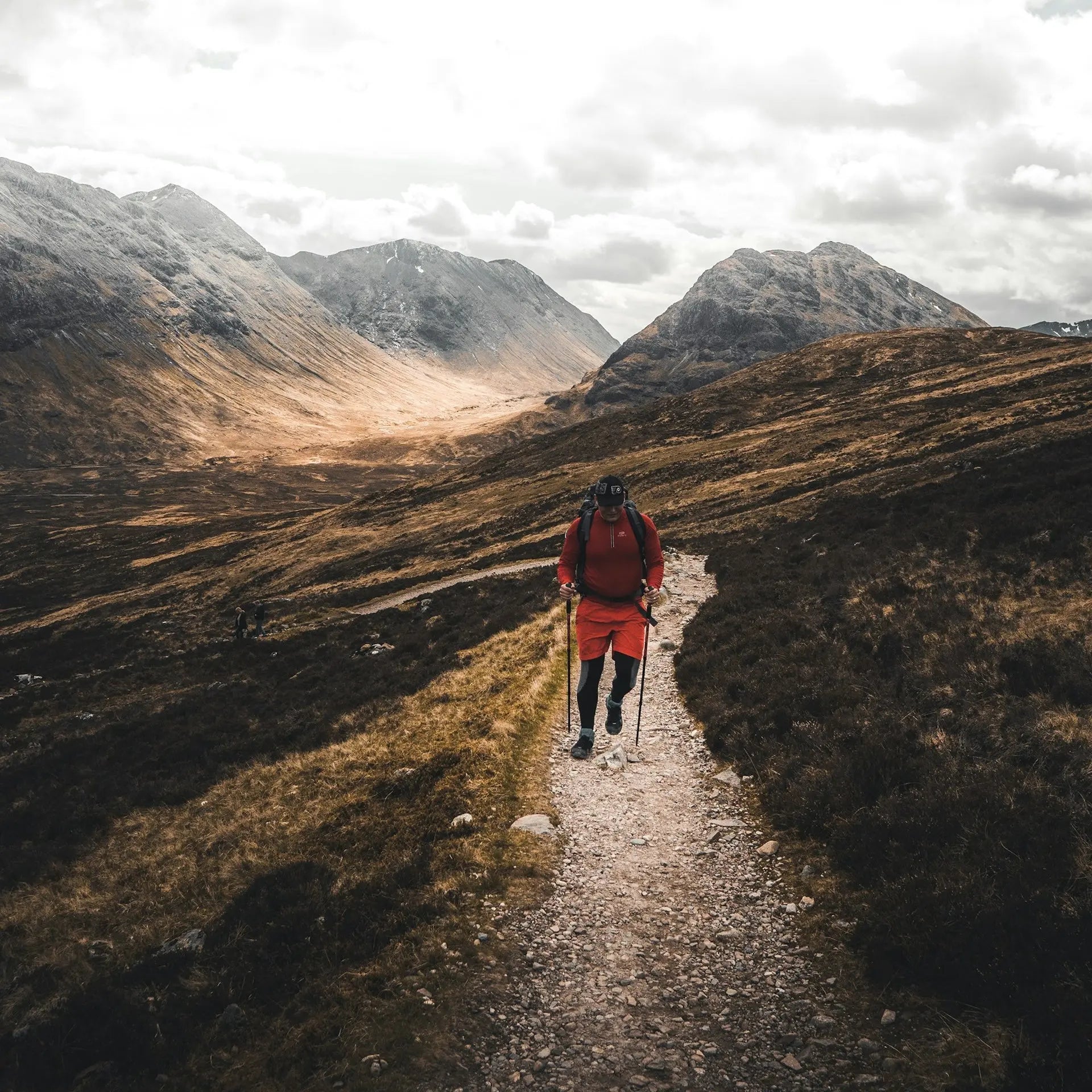
You'll want to be comfortable walking around 22 kilometres a day with a daypack, with several sustained climbs of 500–800 metres, often in heat. That's the Hiker pace, seven days. If that sounds like a lot, the Explorer pace spreads the same route over nine days with shorter days and more recovery.
When should I walk it?+
March, April, May and October are the best months — manageable temperatures, the refuge open, water in the springs. February and November can work depending on the year. Avoid June to August: the Tramuntana gets very hot and exposed, and the long climbs become genuinely punishing.
Do you include luggage transfer?+
Yes, on the village stages — one bag per person, up to 20 kg, moved hotel to hotel while you walk. The exception is the mountain section over Tossals Verds: there's no road to the refuge, so you carry an overnight bag for that one night and your main luggage skips ahead to meet you on the far side.
What kind of accommodation do you book?+
Family-run rural hotels, restored manor houses and traditional village guesthouses, with breakfast and en-suite rooms. In Sóller and Pollença there's more choice; in the smaller villages options are limited, so we book early. The one mountain night is a bunk in the Tossals Verds refuge — simple, shared, and the only thing up there.
Can I walk it solo?+
Yes. The GR221 is well waymarked with red-and-white flashes the whole way, and between March and October there are usually other walkers around. The villages are small and used to walkers. We add a single supplement to cover single-occupancy rooms, and you'll never be far from a village with a café.
What's the realistic total cost?+
The Hiker package starts at £889 per person. On top of that: flights to Palma (cheap and frequent from the UK), lunches and drinks on the trail, tourist taxes and any extra nights you add at the start or end.
Is this a self-guided GR221 Dry Stone Route walking holiday?+
Yes. Every GR221 Dry Stone Route trip we run is self-guided: you walk the route on your own, at your own pace, with no group and no guide. We do the planning and the logistics — an itinerary of 3 – 9 days built around the pace you choose, accommodation booked in your name along the 138 km route, your main bag moved between stays each day, GPX files and route notes for every stage, and a real person on the end of the phone while you're out there. You choose your own start date; there are no fixed departures.
What's the difference between a self-guided and a guided GR221 Dry Stone Route trip?+
On a guided trip you walk with a leader and a group to a fixed schedule. Self-guided means the day is yours: start when you like, stop for lunch where you like, walk fast or slowly, take a rest day. The route is waymarked and you navigate with the GPX and notes we provide. Everything that makes a trip complicated — accommodation, luggage transfer, the shape of each day — is arranged for you before you arrive.
Can I walk the GR221 Dry Stone Route without a guide?+
Yes — the GR221 Dry Stone Route is a signed long-distance route and thousands of people walk it independently every year. What most walkers want help with isn't navigation, it's the 138 km of accommodation, the bag transfers, and getting the daily distances right. That's exactly what we take off your hands, while you still walk it under your own steam.
Who books the accommodation and moves my luggage?+
We do, both. We book walker-friendly B&Bs, inns and small hotels in your name at each overnight stop, with breakfast, and arrange door-to-door luggage transfer between them so you walk with a daypack. You'll get a full itinerary with every address, check-in detail and transfer time before you travel.
How many days do I need for a self-guided GR221 Dry Stone Route?+
Most people take 3 – 9 days for the 138 km. Our planner lets you set your own pace and number of nights, so you can stretch the trip out with shorter days or compress it if you're used to back-to-back big days — the itinerary, accommodation stops and price all update as you change it.