
Notes from our trail journal
Never Do That Again
Fresh from 23 days alone on a survival show, Eva Outram went looking for room to think. Wadi Rum had plenty.
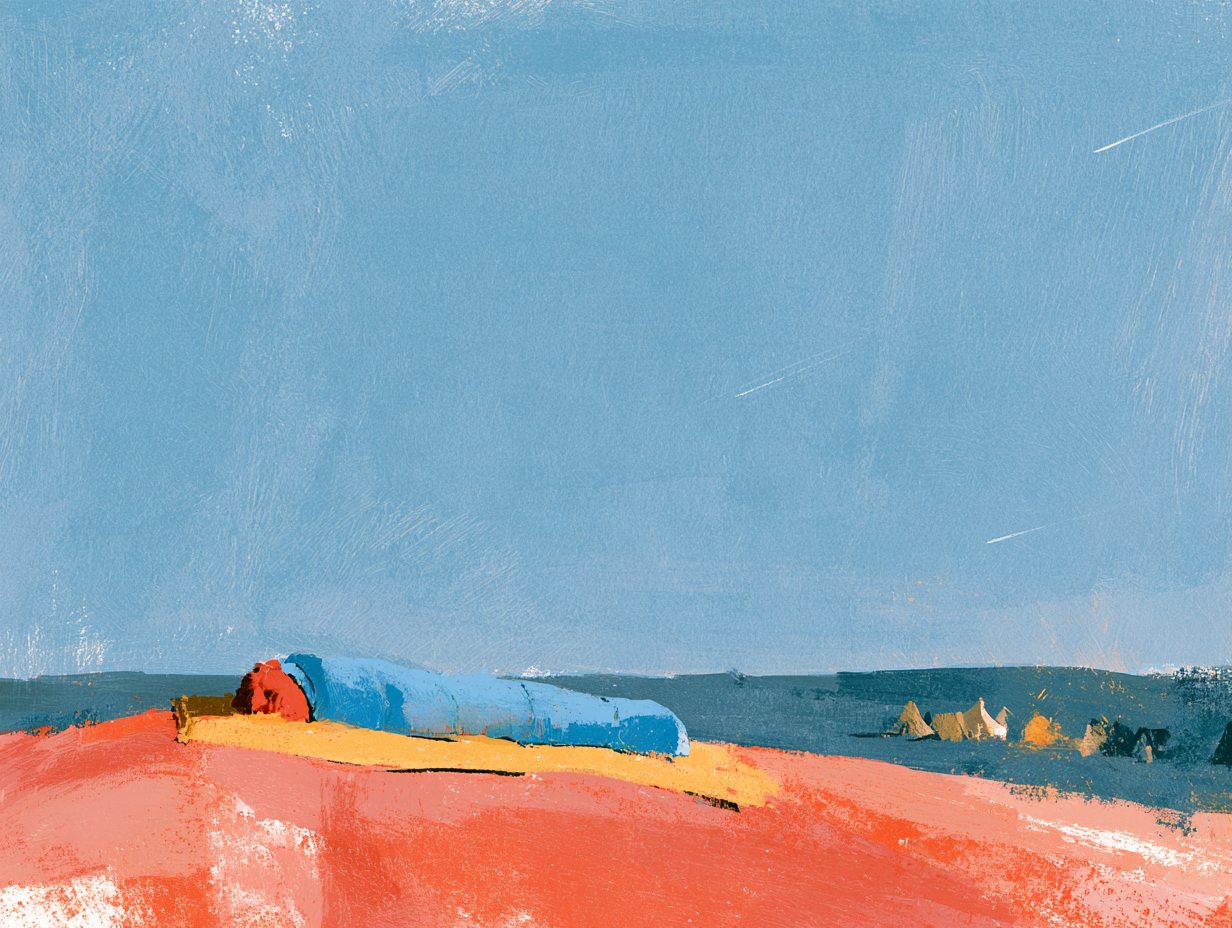
She dragged her sleeping bag and mat up the dune in the dark. It was the sort of decision that makes sense at one in the morning and rather less sense by breakfast.
Someone in a nearby tent was snoring. Not the occasional kind. Eva Outram has the sort of brain, she told me, that locks onto a sound like that and will not let go. She has slept in hostel toilet cubicles to get away from it. So, on one night in Wadi Rum, she gathered up her camping kit and hauled it to the top of the nearest dune and lay down under the stars. There were shooting stars. She says it was a really good night’s sleep.
In the morning, one of the campground owners told her off. Properly. She had risked her life, he said, with the snakes and the scorpions that come out once the heat has gone. Never do that again.
"It just wasn’t something that had occurred to me at all."
I laughed when she told me, and then I thought about it for longer than I expected to. It is exactly the mistake the desert leaves lying around. Everything you know about walking and camping and finding a quiet spot still mostly applies. Then one small thing doesn’t, and nobody thought to mention it.
Eva walked a seven-day section of the Jordan Trail, from Wadi Rum to the sea at Aqaba, three years ago. The Jordan Trail team had invited her to walk a stretch and share it online. The invitation arrived when she had just got back from Alone, the survival programme, where she had spent 23 days by herself. She describes the weeks after as reverse culture shock. Everything at home felt strange, and she had no idea how to start finding her feet again.
Then someone offered her a reason to leave. “I didn’t have to figure out finding my feet again. I got to just sort of leave again and do something completely different.”
Her friends and family were frightened for her. Would she have to cover her head? Could she wear shorts? She wore what she would wear anywhere else, and says Jordan was far more liberal than the warnings had suggested. The people who warned her had never been.
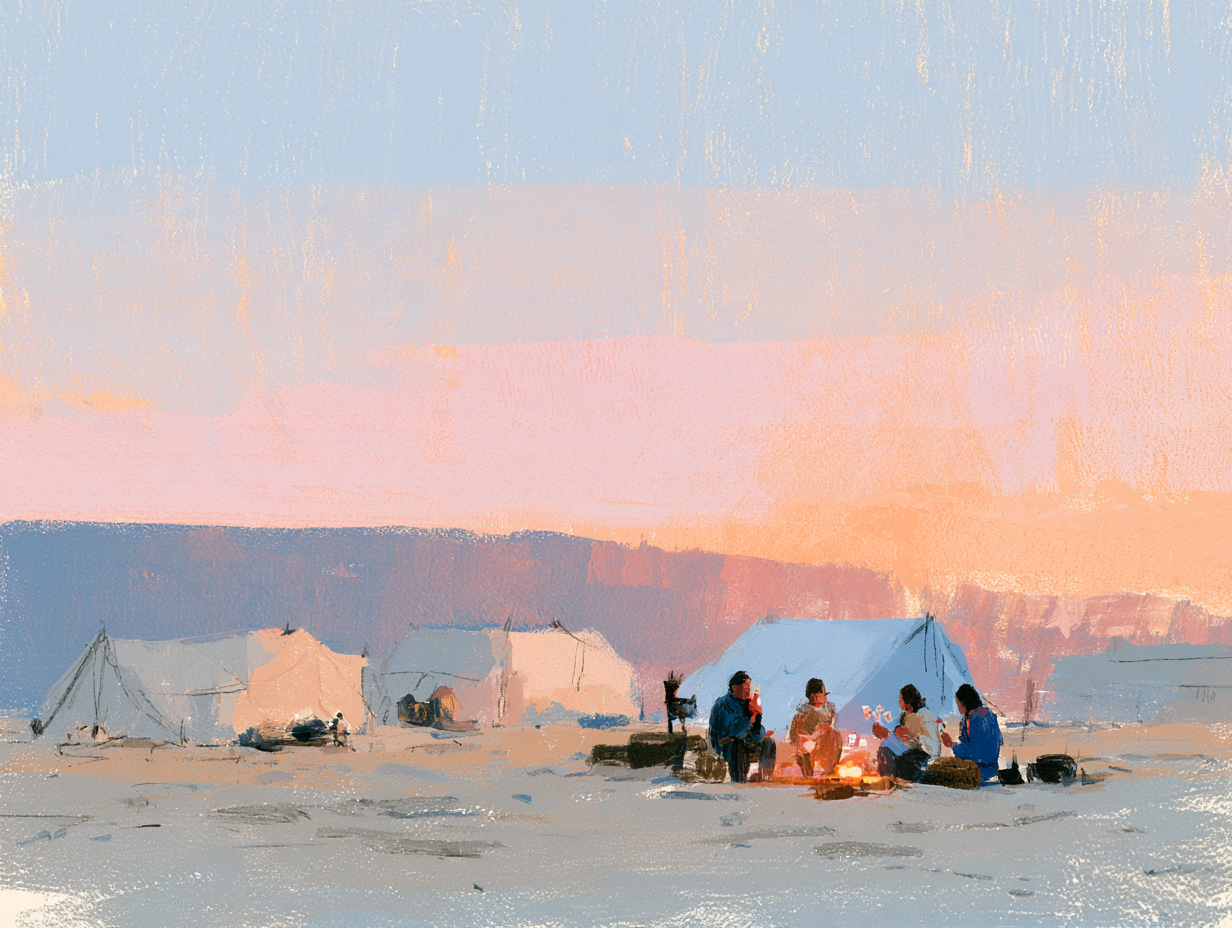
The days had a shape. Up early to get miles in before the heat. Breakfast of pitta, salad, hard-boiled eggs and very sweet mint tea. Four hours of walking, then more of the same food, then four more hours. The days reached 36 or 37 degrees. The nights were cold enough for a wool hat and a fleece, and the temperature fell fast once the sun went. Dinner at the camp was goat stew, couscous, more pitta, and then a fire, more tea and a lot of card games.
I asked her, near the end, whether she still drinks mint tea. “I do actually, yeah. I drink a lot of mint tea.”
The sand was the hard part. Deep sand, with a full pack, for much of each day. The distances were shorter than she would normally cover, because walking in it eats energy. She struggled for the first few days, until her body caught up. There were sandstorms too. She was briefed each morning on what the weather might do, but they seemed to arrive from nowhere. Sand in your eyes whatever you do. No talking, no hearing anything. She pulled her scarf round her face and found a rock to sit behind.
"I was pretty glad not to be on my own during those parts of the trail."
Navigation in that country is its own problem. No landmarks, no contour lines worth the name, and the sand moves. On her own, she thinks, the scale and the emptiness would have got to her. In a group, she mostly enjoyed it.
"It makes you feel very small, which is probably one of my favourite things."
She had been working through a lot at home. The desert gave her room for it. On other trails there are towns and bars and hostels to distract you. Here the view was much the same from one day to the next, and there was nothing to do but walk and let things settle. She doesn’t, she says, do much thinking while she walks. The first couple of days she is full of it, and then it stops. The clarity arrives afterwards, once she is home and looking at her life with fresher eyes.
The people stayed with her too. Camel herders who shared no words with the group would stop them and pull them over for tea, and everyone made do with gestures. And a man in his sixties on the trip, German or Dutch, she can’t remember which, who was cheerful in a way that rubbed off on you. He lived in a cabin with no TV and no internet, and he loved the simplicity of the trail. She wishes she could remember his name. She lives in a caravan without a TV now.
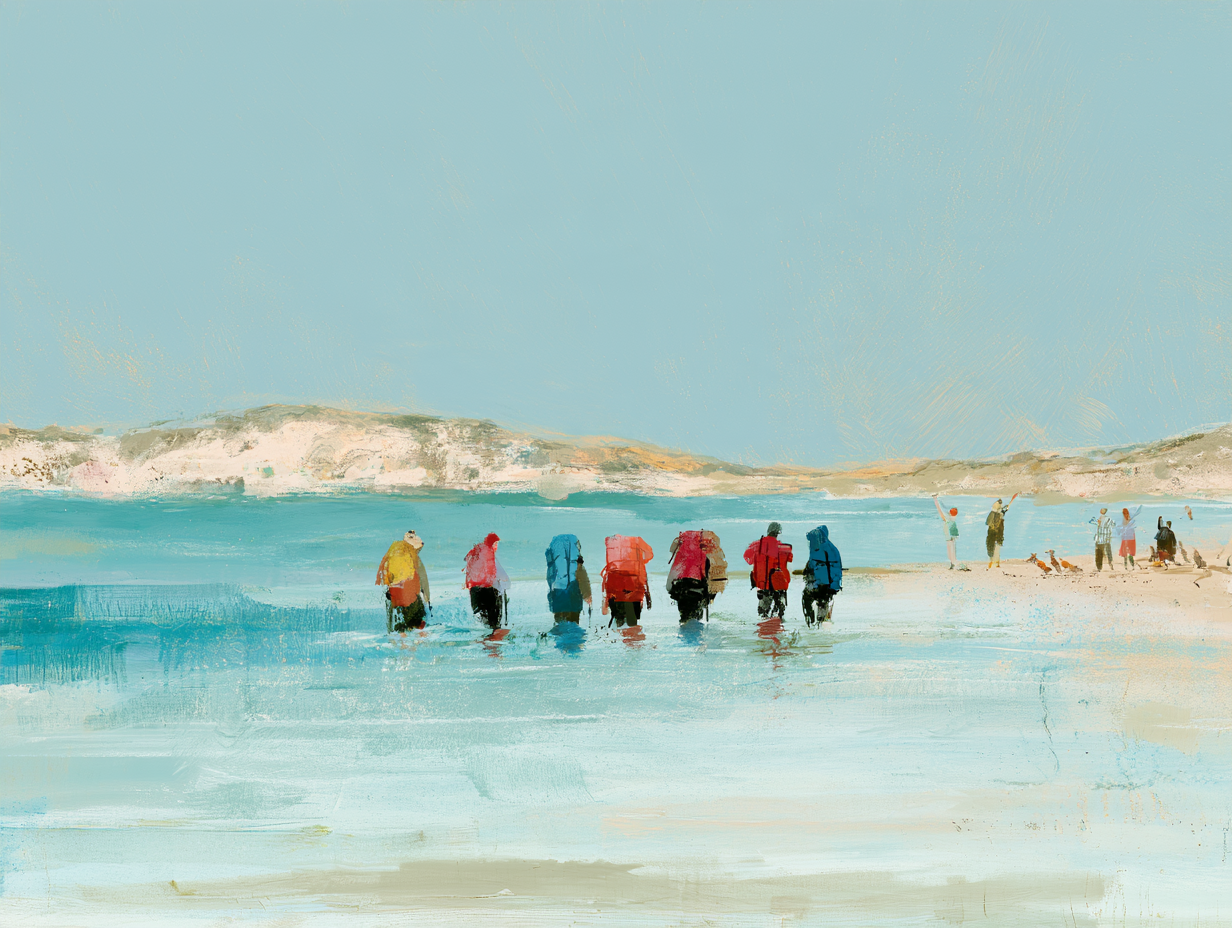
The last stretch into Aqaba was not what she had been expecting. She is careful how she tells it. For a day or two the group walked through rubbish, and at one point a landfill site, after a week of seeing no litter at all. It felt like crossing a border back into real life. “A slight sense of disappointment maybe, but that it’s just real life.” Then they reached the water and everyone ran into the sea, with local people celebrating alongside them.
Three years on, she is a different person with a different job. She left the NHS, retrained as an outdoor instructor and now runs Wilder Horizons. I asked which moment from that week she would go back to, and she didn’t have to think for long.
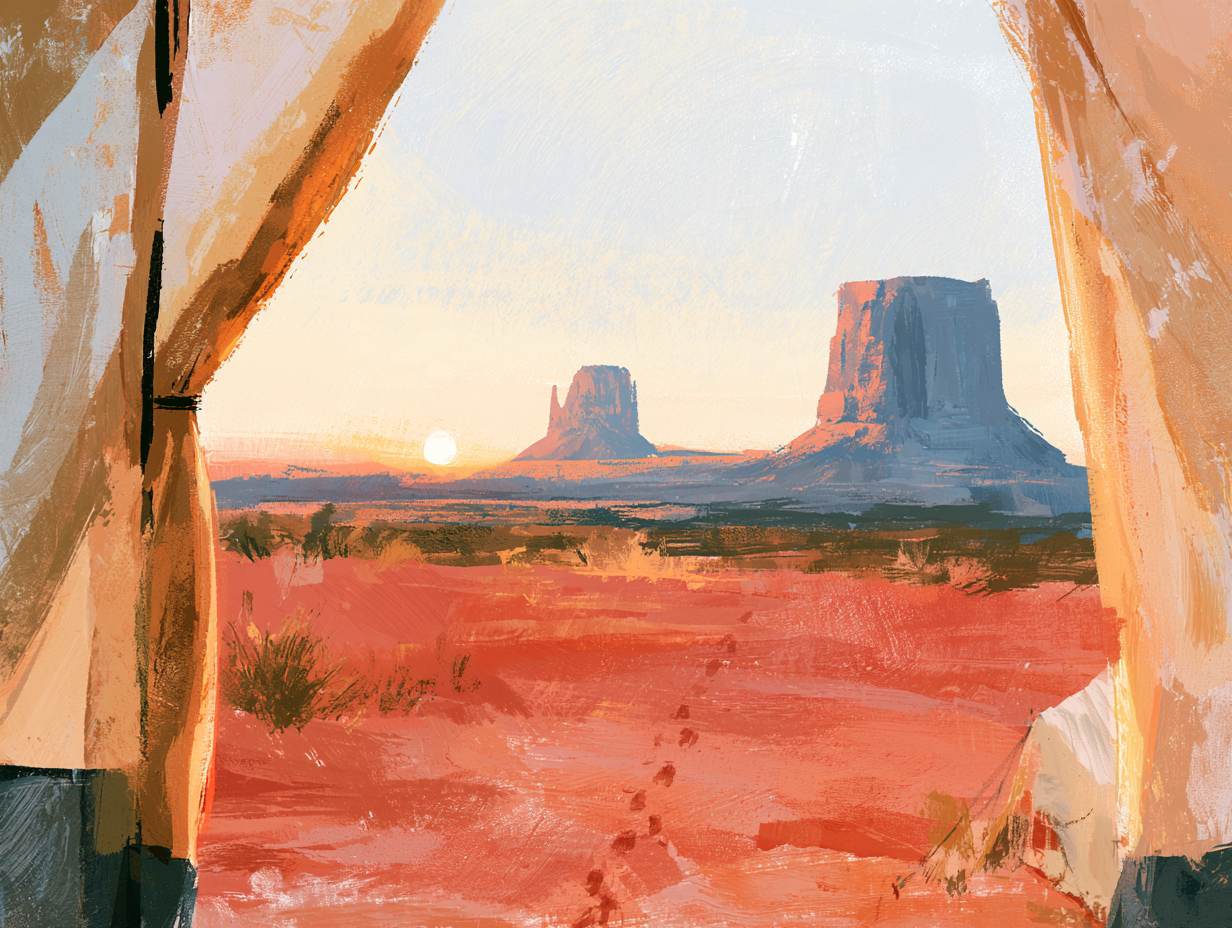
She had arrived in the dark. A flight to Amman, a late night drive, some off-roading in a jeep she describes as sketchy, a tent among other tents. She hadn’t seen any of it. Then, in the morning, she unzipped the door.
"I felt like I’d woken up on Mars."
Eva Outram
Eva Outram is a former NHS project manager turned bushcraft and archery instructor, paddle sport leader and mounted leader. She founded Wilder Horizons, a women-led not-for-profit running bushcraft and nature connection events for women.
“Woke up the next morning and saw the landscape for the first time, which was unlike anything I'd ever seen before.”
Also from the trail journal.
The Smell Is Not a Problem
Beth Langley has fastpacked the Tour du Mont Blanc twice. The second time she had company, better legs and one t-shirt fewer.
The Shore Looked Easier
Kit Birks walked 5,000 miles from the top of Norway to Greece. The day that nearly ended it began with a shortcut.
The Long Way Home
Elsey Davis ran the whole edge of Cornwall and back to Land's End in six days. The record was never really the point.