
Notes from our trail journal
The Long Way Home
Elsey Davis ran the whole edge of Cornwall and back to Land's End in six days. The record was never really the point.
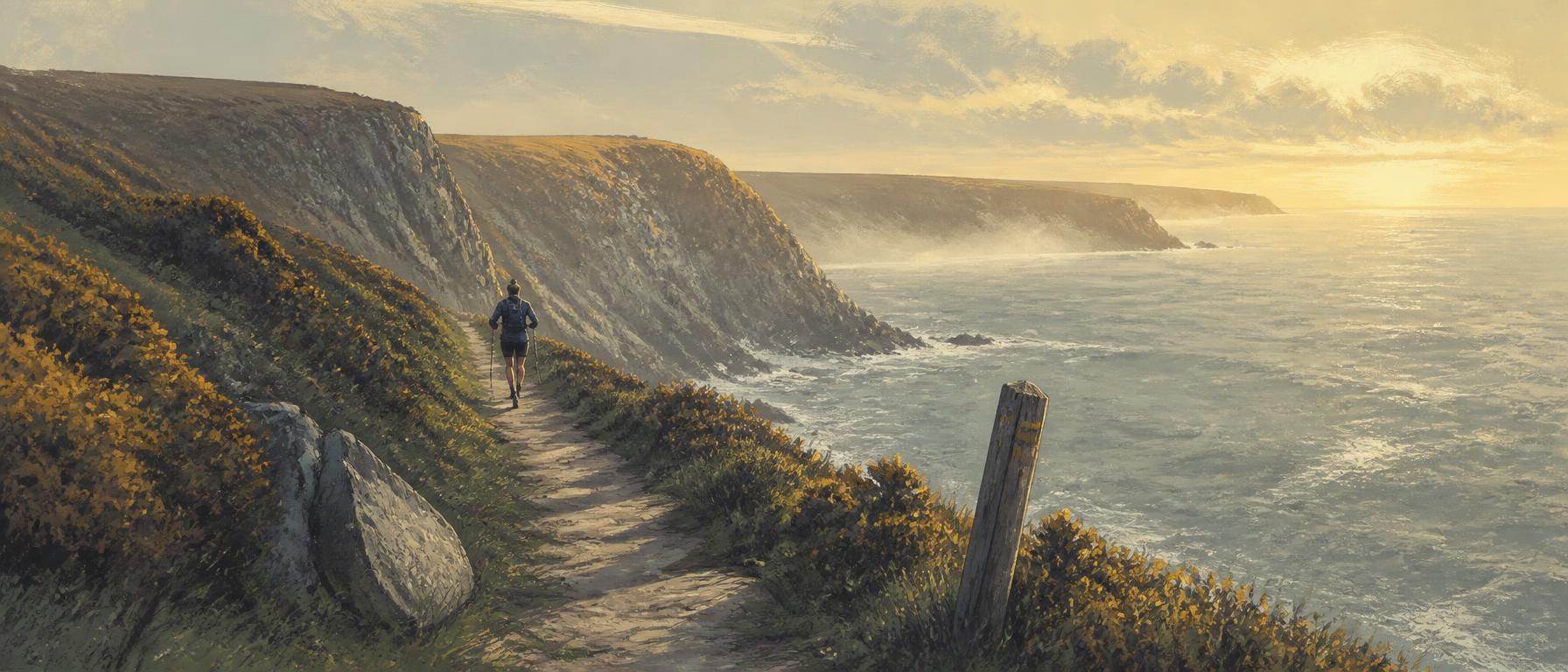
The bit that was supposed to be easy was the bit that nearly did for her.
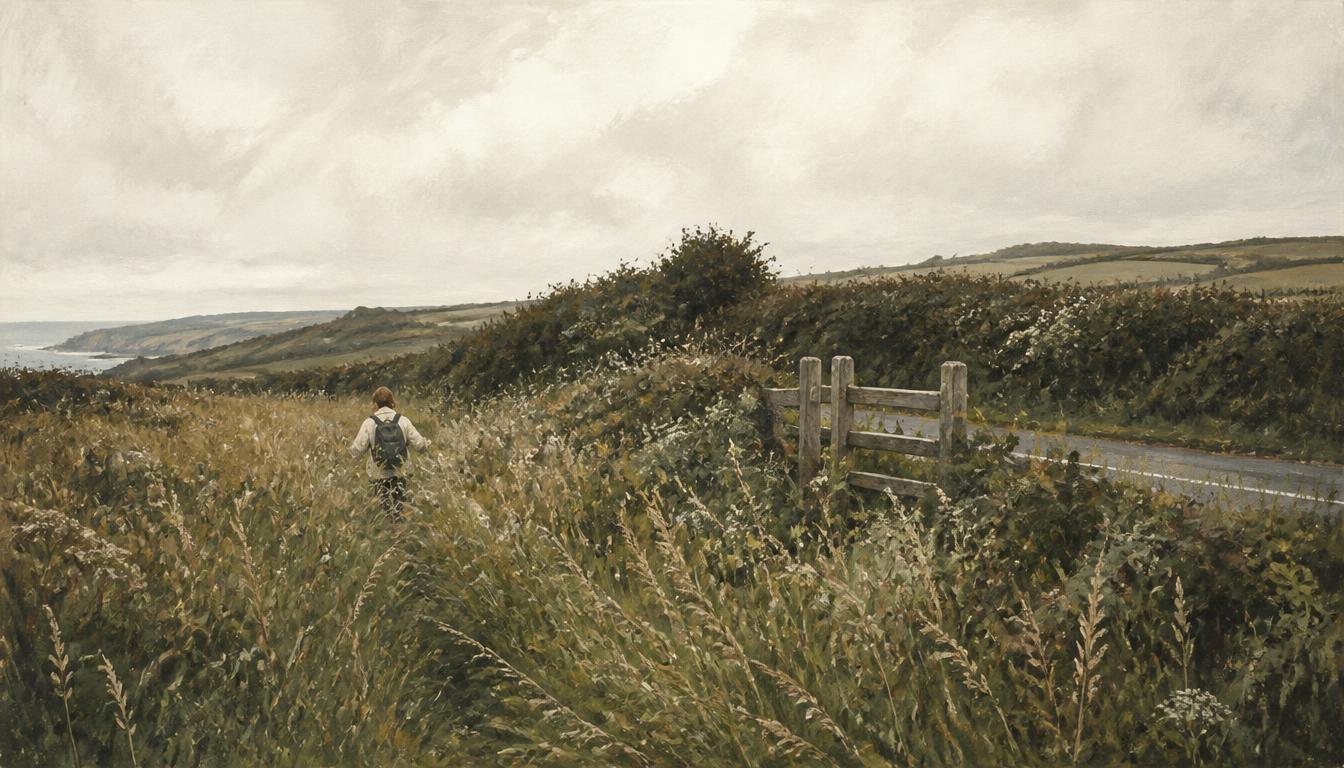
Somewhere in the middle of the week, Elsey Davis turned her back on the sea and headed inland along the Tamara Way, the line that stitches the north coast to the south down the Devon border. She'd pencilled it in as the recovery day. Flatter, softer, fewer cliffs. Chris Taylor, who was running her logistics, had looked at the map and asked whether she was sure. There was no Strava heat map along most of it. Nobody runs there.
She found out why. Overgrown field, then road, then overgrown field, then road. "It just had no flow to it," she tells me. She'd underestimated how much the coast had been carrying her. When she finally dropped back to the sea, she felt, in her words, like a new person.
"It's an indescribable feeling. I guess it just feels like home."
Elsey grew up in Cornwall and still runs the coast path when she's back. She was a GP until a few years ago and, by her own account, a road runner who'd never gone further than a marathon in one go. Ask her five years ago whether she'd run the full circuit of the county, 400 miles or so in a week, and she says she'd have been worried for her future self. She assumed something like that would end her running for good.
The idea arrived quietly. She was browsing the fastest known time website, looking for local inspiration, and noticed nobody had claimed the Cornwall loop. She filed it away. Then, in 2023, her mum was diagnosed with young onset Alzheimer's.
What she describes next is something I think most of us recognise, whatever the diagnosis in the family. The powerlessness. The wanting to do something and there being nothing to do. The loop came back to her, this time as a way of taking a bit of that power back and raising money. She pitched it to The North Face, who back their athletes' own projects, and they said yes. She scheduled it for a month after her last race of the season, CCC at UTMB, so that if it broke her, at least she'd have the winter to mend.
Between that race and Land's End, she did a handful of runs. Sharpness wasn't going to matter. She just needed to be healthy and to have a summer's endurance in her legs.
Six days, give or take
The plan was 100 kilometres a day, six days, give or take. The days were meant to be short and fast so the nights could be long. In practice she got four or five hours of sleep in a camper van shared with other people, waking early in pain, and then again in the small hours because she'd spent the evening catching up on fluids and now needed to get out and pee.
The part I keep coming back to is the mornings. By day three everything hurt and everything was swelling. Getting to the loo in the night was a shuffle. "I'd be like, oh my God, how am I going to run tomorrow if I can't even get to the loo?" And then, every morning, she could. She'd get moving and the body would remember what it was for. She ran nearly all of it. She doesn't much like walking.
Halfway didn't feel like anything. She remembers thinking, well, that means I've got to do it all again, and everything hurts. There's no bargaining with a fact like that. But at no point, she says, did she think she wouldn't finish, and when I ask why, the answer is simple. She knew why she was out there. Had she torn something, she'd have walked it. Had she not been able to walk it, she'd have been on crutches.
"I think if I was just doing it for the sake of doing it, it would have been a lot tougher."
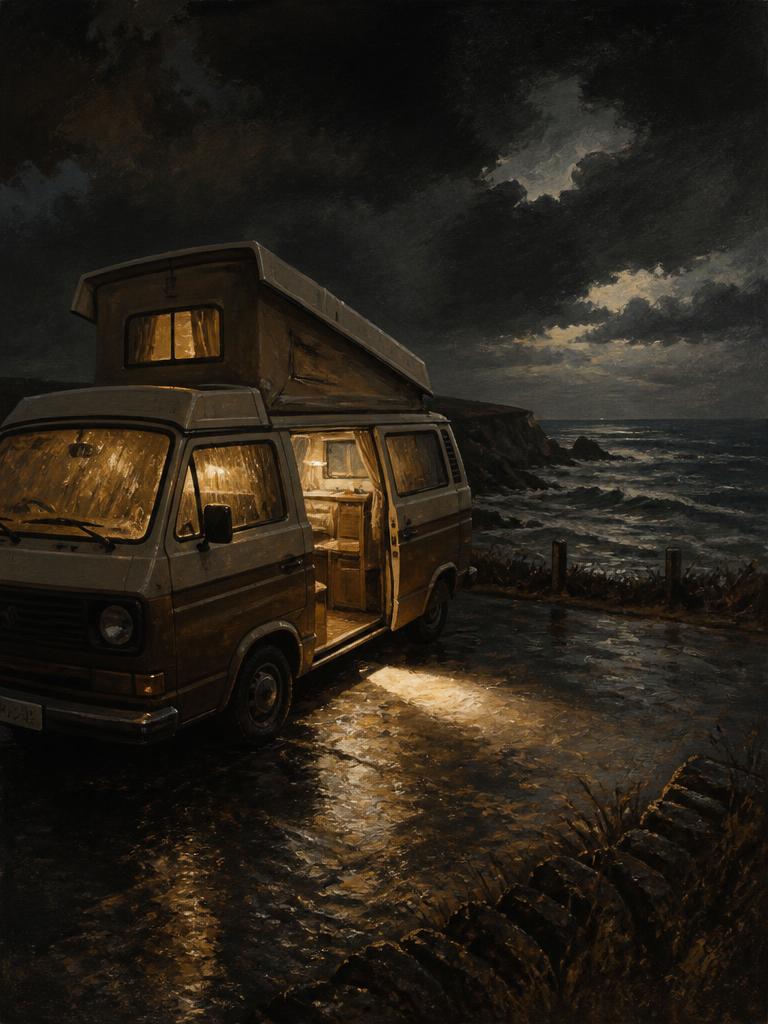
Then the storm came in at the end of day four. Ferries were cancelled, the drive-arounds got long, and one day she stopped ten miles short, weather-beaten, knees and achilles swollen. The next days brought headwinds she puts at fifty miles an hour. The sub-six-day finish was still there if she pushed, but pushing meant arriving at Land's End in the dark.
She wasn't having that. Her mum's dementia affects her depth perception, and Elsey wanted her to run the last bit alongside her, which meant daylight. So she slowed the whole thing down by a morning. "In a way, the storm was good," she says, "because it meant I could finish with mum."
Not a robot
Chris Taylor, the logistics man, wrote to her afterwards. Until about the halfway mark, he said, he'd thought she was a robot. She just ticked things off. She tells me that was deliberate: she was frightened that if she let the struggle show, the whole thing would come apart. Then at Mevagissey on day five she saw her wife Sarah, who had been following the route with their baby son, and she broke down. After that, people cheering from a gate would set her off.
Her dad, a road runner, was simply astonished. Her wife wasn't. And her sisters told her later that hearing her talk about their mum's illness so openly, for months, on record, had made it easier for them to talk about it too. Elsey says she hadn't spoken to many people about the diagnosis before. It's uncomfortable and people don't know what to say. Talking about it every day for a week turned out to be the most useful thing she did.
She pauses once during our conversation, when she gets to how hard the last couple of years have been, and apologises for it. She needn't.
Land's End
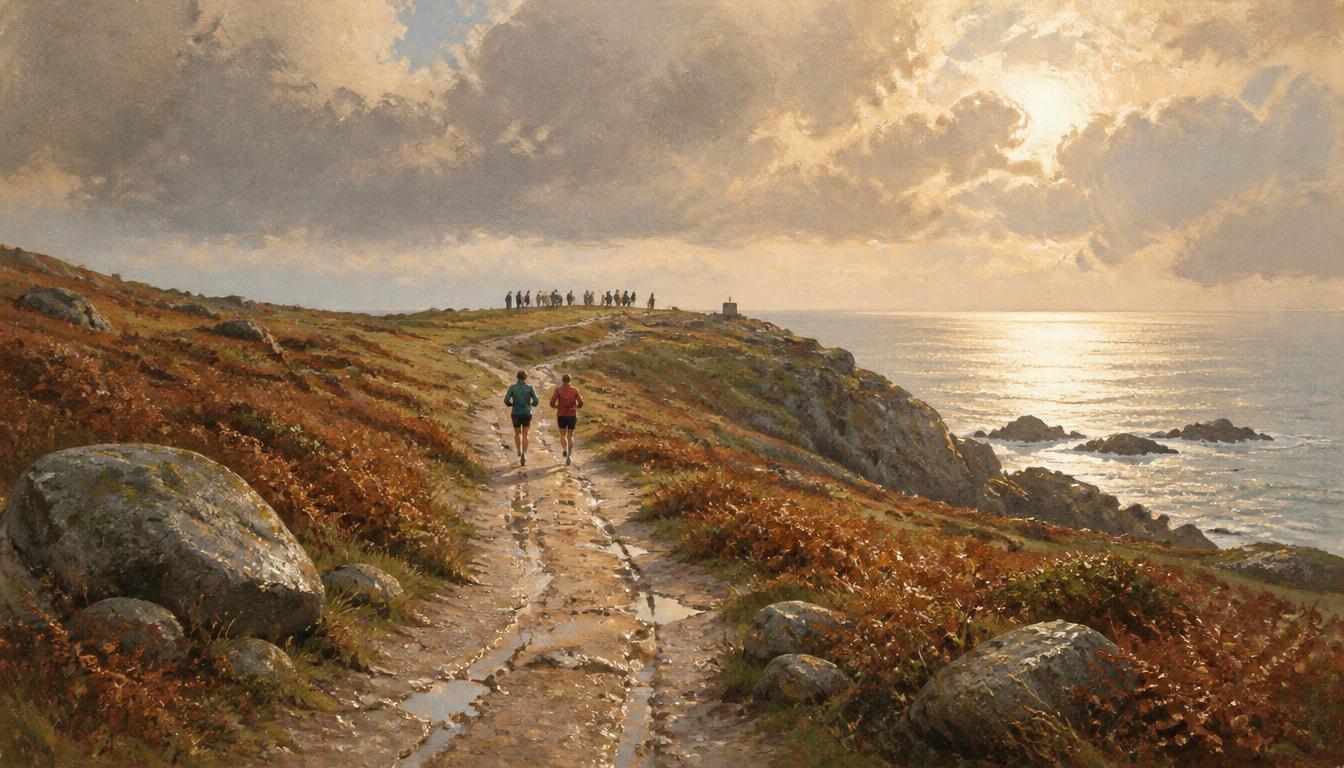
At the finish there were people waiting at Land's End. Her mum, she thinks, didn't fully understand what the week had been. But in that moment, being cheered in, running the last stretch beside her daughter, something got through. Elsey says she'll keep that forever, and I believe her.
The week after was unusual for her. Normally she's looking for the next race before the legs have stopped aching. This time she just felt content. She values results a bit less now.
I ask what she'd want her mum to understand, if she could understand one thing about why she did it. There's no hesitation. "Just out of love, really. I'd do it all again if it took her diagnosis away."
Then, because it's the sort of thing you can't finish an interview without asking, I ask what people get wrong about ultrarunning. She laughs. "That it's always running." Towards the end, she was hiking the hills like everybody else.
If there's even one per cent of you that thinks you could do it, then try it.
Elsey Davis
Elsey Davis is a Cornish ultrarunner and former GP, sponsored by The North Face. She holds the first fastest known time for the circuit of Cornwall, roughly 400 miles, set in just over six days.
Written by
Rob Savin
Founder, Big Trail Adventures
Rob writes the Big Trail Adventures journal and talks to walkers and runners about the trails they've just come home from.
Also from the trail journal.
The Smell Is Not a Problem
Beth Langley has fastpacked the Tour du Mont Blanc twice. The second time she had company, better legs and one t-shirt fewer.
The Shore Looked Easier
Kit Birks walked 5,000 miles from the top of Norway to Greece. The day that nearly ended it began with a shortcut.
The Bench, the Stream and the Fox
Seven days, an eleven-kilo pack and a first go at wild camping. Rick Clark on what the Pembrokeshire coast does to an ultra runner who assumed it would be easy.