Notes from our trail journal
The Smell Is Not a Problem
Beth Langley has fastpacked the Tour du Mont Blanc twice. The second time she had company, better legs and one t-shirt fewer.
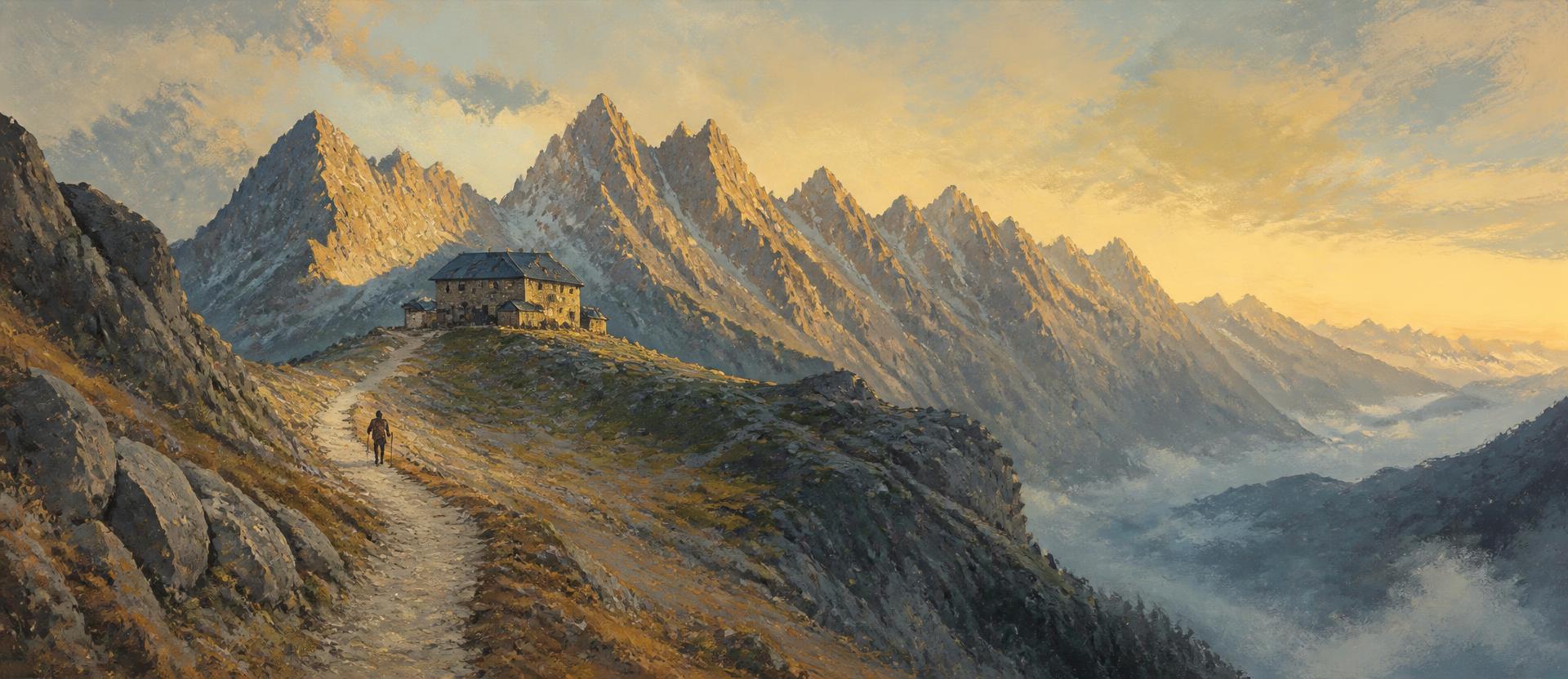
Day three. Forty-eight kilometres already in the legs, two and a half thousand metres of climbing, and the trail up to Champex-Lac has turned into switchbacks. Beth Langley looks at her watch. Then she looks at it again. The number has barely moved.
"I remember thinking, oh my gosh, I'm really not making any progress here. How long is this climb going to go on for?"
It isn't a big climb, she tells me. Not by the standards of the Tour du Mont Blanc. It's just the one that comes after all the others. That's the thing the elevation profile doesn't show you. The climbs are not the problem. It's that each one is paid for out of the same pair of legs.
She got up it by going back to why she was there. You've chosen to do this. You get to do this. I've heard versions of that line from a lot of people on this podcast. Beth says it without any ceremony, as though it's a practical technique, like using poles. Which, I suspect, is exactly what it is.
Beth has fastpacked the Tour du Mont Blanc twice. The first time, in late August 2022, she went alone, over three long days, as a challenge she'd set herself. The second time, in 2025, she went with her partner Arthur as a recce for the UTMB, the race that runs on the same ground. She is, by her own description, a minimalist. When I ask about her pack she says everything in it had to have a purpose, and then corrects herself. Not necessarily a use. The emergency kit has a purpose. You hope it never has a use.
Fastpacking, if you haven't done it, sits somewhere between walking and running, and Beth is careful not to oversell the running part. "Don't get me wrong, a lot of it I was walking." Power hiking, the trail runners call it. Poles out, one foot in front of the other on the long climbs. Then running the descents where the ground allows, and the flat bits too, except the TMB doesn't really have flat bits. You are either going up the mountain or down it.
The first time, that meant ten to twelve hours a day. Up at six, out of the refuge by seven, arriving somewhere around five or six in the evening. The reason for the tight arrival isn't ambition. It's dinner. The refuges serve everyone at the same time and ask you to be there for it. So a good part of a whole day's focus on the trail comes down to a plate of food at a set hour. I find that oddly reassuring.
What I wanted to know is how you keep hold of the place while you're moving through it that fast. I have a line I say to myself on these trips, usually out loud. Rob, it's the journey, not the destination. It has never once worked. Beth's answer is smaller and more useful. Stop looking at your feet. Look up. The moments she remembers best are halfway up climbs, where she did exactly that. On the Grand Col Ferret she just stopped, sat down and looked around.
Then the t-shirt
I ask whether she was more ruthless with the pack the second time. She thinks about it and comes up with one item. The spare t-shirt. "Which might sound slightly disgusting," she says, "but actually, once you've been out running for one hour, there's no need for that clean t-shirt." You wear yesterday's. Everyone around you is wearing yesterday's.
"The smell is not a problem."
I have carried a clean t-shirt over a lot of mountains. I have never, on day two, felt clean for more than an hour. I laughed, and then I thought about how much of what we carry is packed for the version of ourselves we imagine at the start, not the one who actually turns up on the hill.
Her luxury, for the record, is lip balm. SPF. She won't quite call it a luxury, because it does a job, but she admits that putting it on felt like one.
The food she is happy to call good. France, Italy, Switzerland. It was always going to be. Croziflette on the first night at the Refuge de la Croix du Bonhomme, a pasta bake heavy with cheese, followed by chocolate cake. Blueberry tart at the lunch stops. She lists these with the same evenness she gives the elevation figures, and I don't think that's an accident. On a trip like this the tart is a data point too.
Alone, and then not
The question I most wanted to ask, I apologised for in advance. Arthur, if you're reading this, sorry. What did she miss, second time round, about doing it alone?
She apologises too, then answers properly. Alone, her senses were up. The views, the smells, the sounds. Company is good and it is fun, and she was less in the moment for it. That's not a complaint about Arthur. It's an observation about attention, and I think she's right.
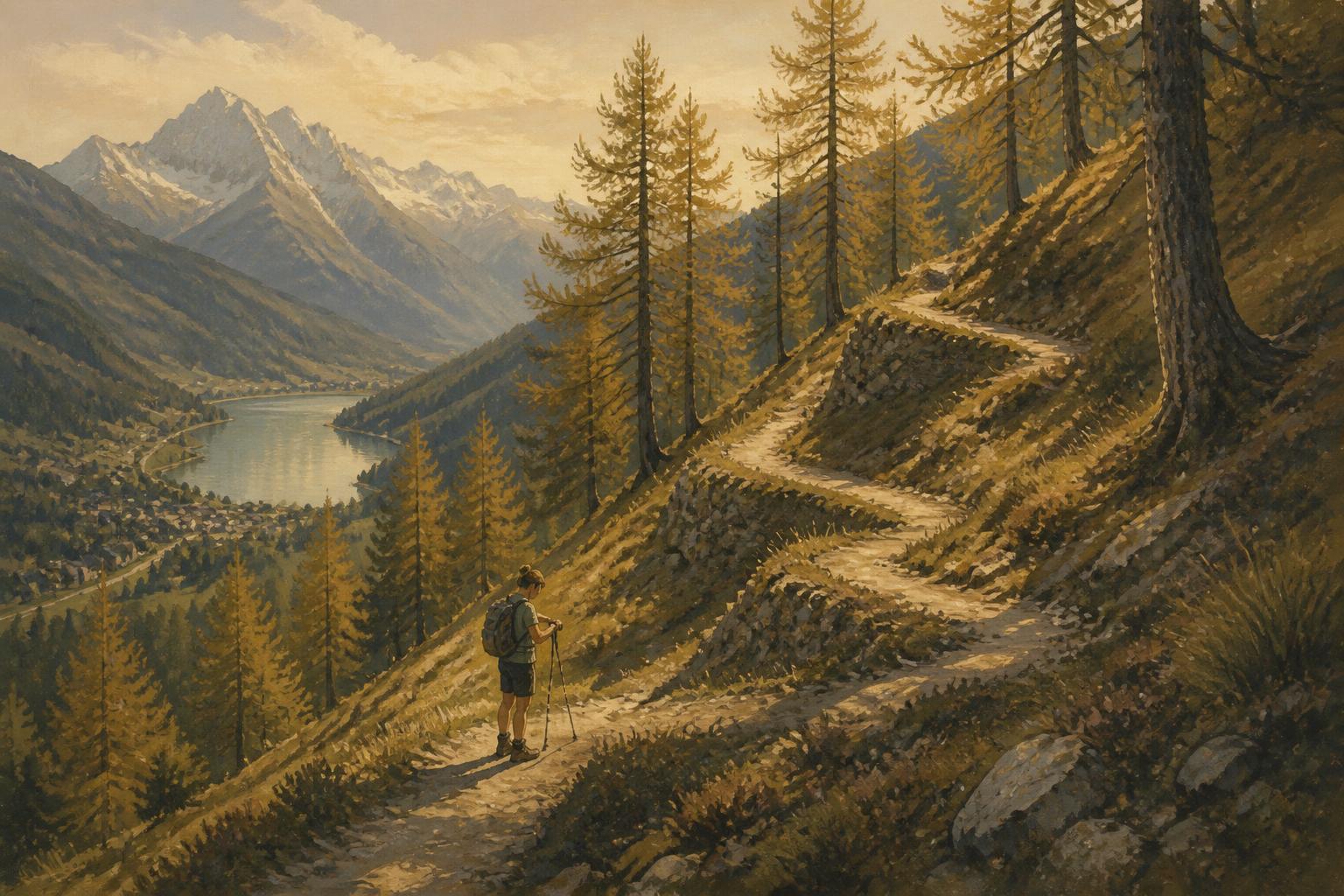
The two trips didn't even agree on which bits were best. The first time, the section she loved was the balcony out of Courmayeur on day three, five kilometres or so of flowing trail with the Mont Blanc massif on her left, so large it made her feel small, which she says is the whole point. Second time, she'd been looking forward to that section for months and hit a low patch just as she reached it. Meanwhile the climb to the Col de la Croix du Bonhomme, which she hadn't much enjoyed in 2022, became her favourite view on the whole route. You come round the shoulder of the col and there's the refuge, with the range behind it.
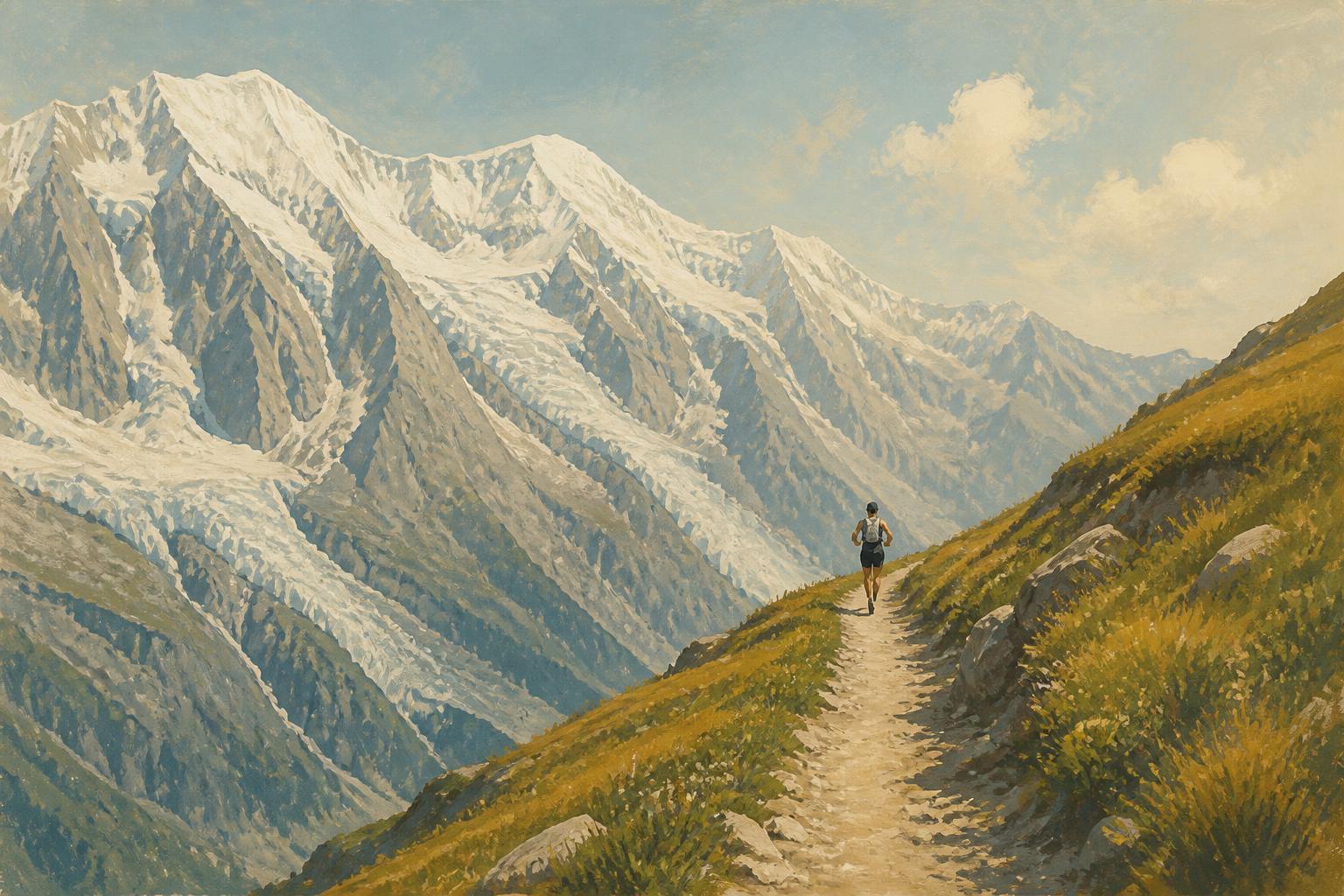
Same path. Same person, more or less. Different day.
She would go back a third time, she thinks. The only thing that would tempt her away is that there's so much else, and our time is limited. She says that lightly. I wrote it down.
Beth started her first TMB in the same stretch of her life as she started a PhD, with all the usual questions about whether she was good enough. The two things have nothing in common, she says, except this. She set herself a hard thing and did it, and when the PhD gets hard she can reach back for that. Being the one who pulled herself out of the low points. Being the one who solved the problems, because there was nobody else to.
I ask if she thinks everyone should do an adventure alone. She says everyone could learn something from one.
If she could go back to a single moment it wouldn't be the massif, or the top of the hard climb. It would be the end of that first day, coming round the mountain to the Col de la Croix du Bonhomme, seeing the refuge, then being inside it. The morning she woke there it was six o'clock, the sun was coming up, and the room was full of people quietly packing their bags. What a view, she thought. And then: oh my gosh, I have a huge day ahead.
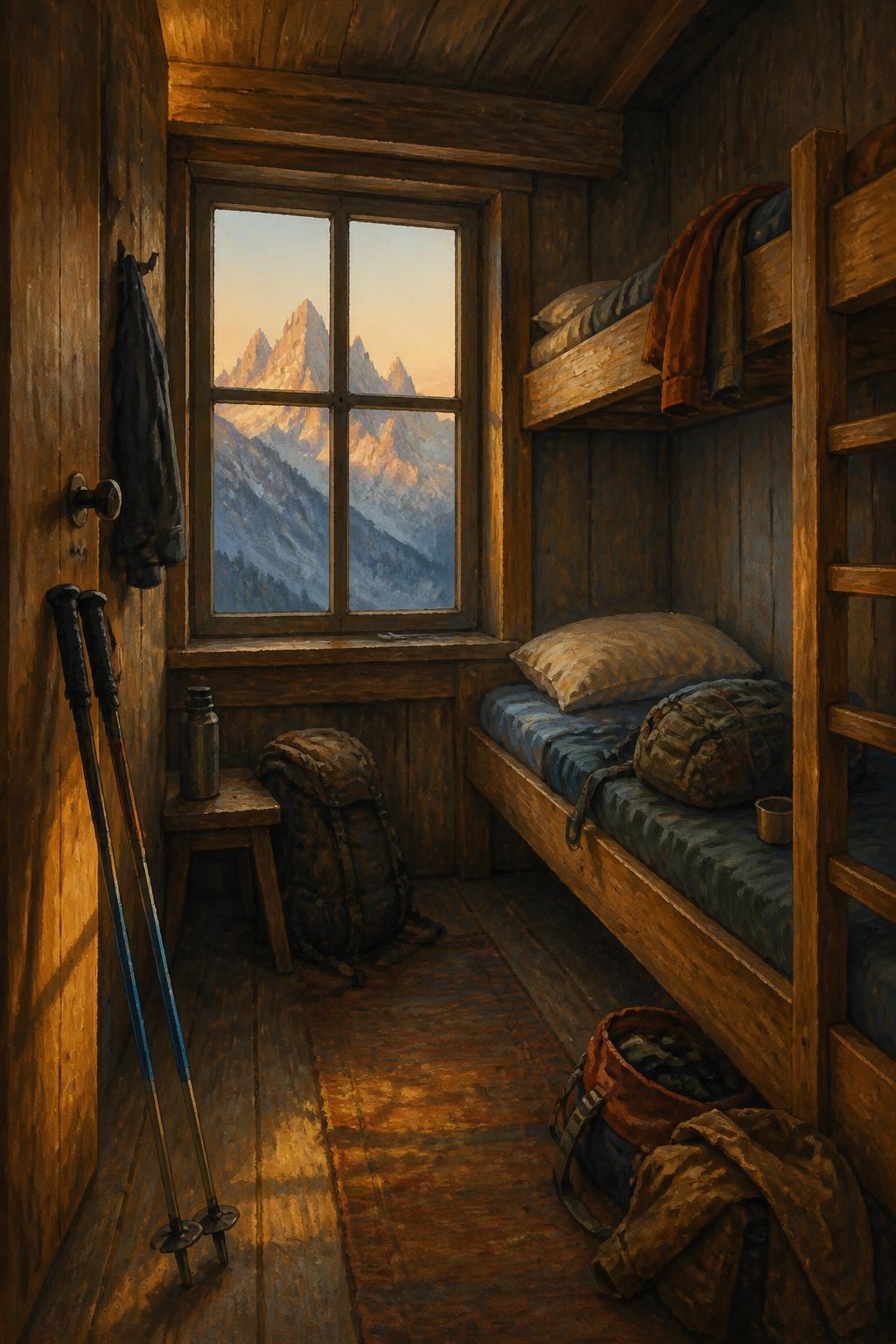
You don't have to be a super fit ultra marathon runner to take on the TMB. You can do it at your own pace, at your own speed.
Beth Langley
Beth Langley is a trail runner and PhD student. She fastpacked the Tour du Mont Blanc solo in 2022 and again in 2025 as a recce for the UTMB.
Written by
Rob Savin
Founder, Big Trail Adventures
Rob writes the Big Trail Adventures journal and talks to walkers and runners about the trails they've just come home from.
Also from the trail journal.
The Shore Looked Easier
Kit Birks walked 5,000 miles from the top of Norway to Greece. The day that nearly ended it began with a shortcut.
The Long Way Home
Elsey Davis ran the whole edge of Cornwall and back to Land's End in six days. The record was never really the point.
The Bench, the Stream and the Fox
Seven days, an eleven-kilo pack and a first go at wild camping. Rick Clark on what the Pembrokeshire coast does to an ultra runner who assumed it would be easy.