Notes from our trail journal
Never Quit at Night
Seven days, eight passes, sixteen kilos each and not another walker for two days. Bodil and Ross on the Alpamayo Circuit, and the night they nearly called it.
The watches said zero. That was the problem.
Ross and Bodil had been counting down a pass on day three the way you do when the legs have gone and the arithmetic is all you have left. Five hundred metres of climbing to go. Four hundred. Then the number ran out and the pass didn't. Every rise they topped had another rise behind it. It was raining, the afternoon rain that arrives in the Cordillera Blanca at two o'clock as if it has a timetable, only earlier. Ross had eaten nothing at lunch because his stomach had stopped cooperating two days before. Bodil had eaten hers on the move, spooning a dehydrated meal out of its bag while picking a line through a bog with bulls in it.
"It was the worst flavour we'd had so far"
She says it and I can hear that this is the detail that still rankles.
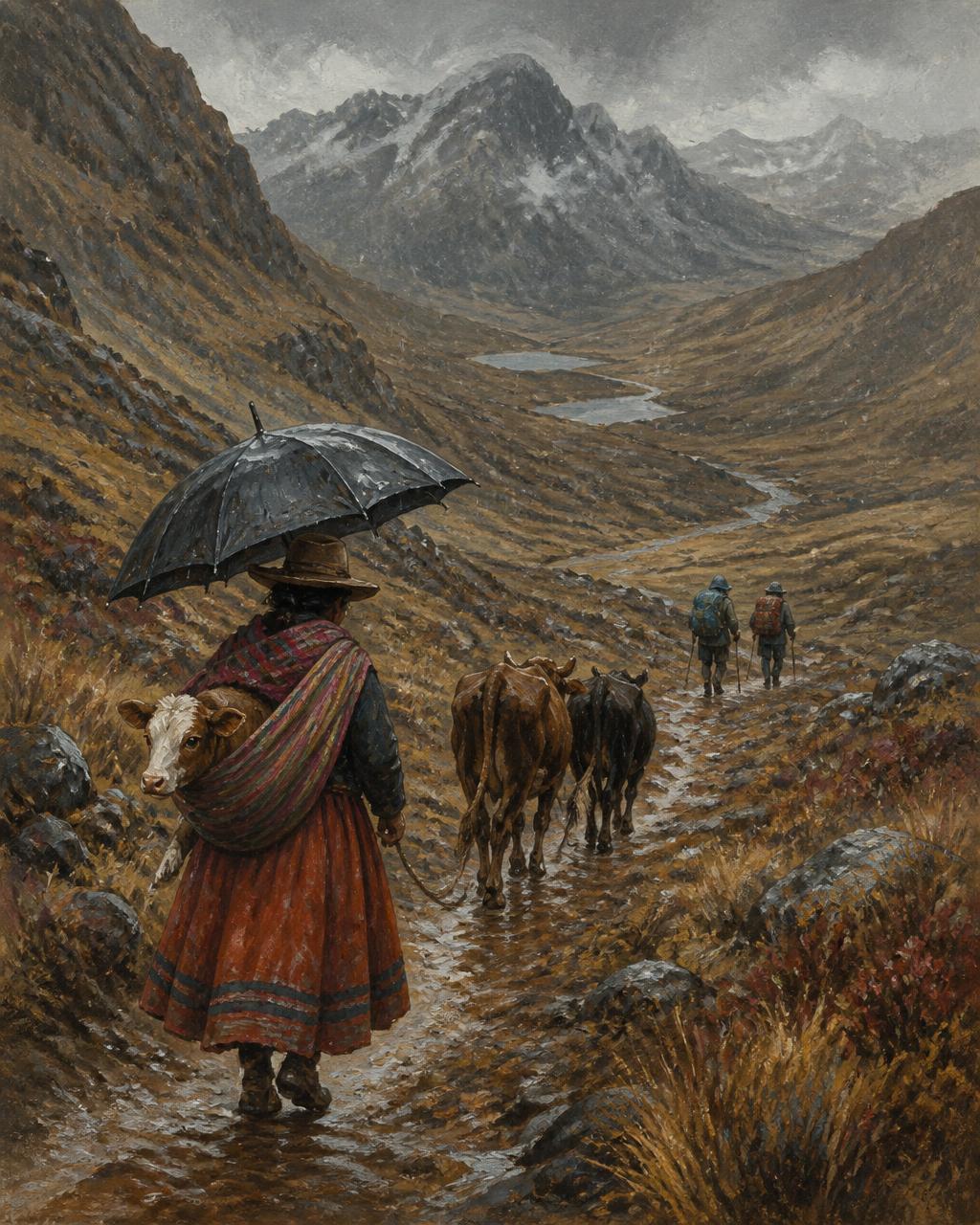
They got over. Some tears may have been shed. On the descent, in what was now torrential rain, they passed a farmer leading two cows on a rope, and behind him his wife, in full traditional dress, an umbrella in one hand and, in the sling across her shoulder where you would expect a baby, a calf. A small woman in little dress shoes, moving downhill faster than two people in waterproof boots with proper grip.
Then a junction, a left and a right, and Ross took the wrong one.
Bodil Oudshoorn and Ross Brannigan live in Switzerland, she from the Netherlands, he from Scotland, and they do most of their exercise together. When I ask who struggled more with the altitude, Ross says he'll let the person born below sea level answer, which tells you something about how they operate. As they were finishing up their jobs this year, Bodil sent Ross off to find a trek with one requirement: not the one half of backpacker Peru is doing. He came back with ten days. Ten days of carrying their own food would break her back, she said. Could it be six? It became seven, quickly.
What Ross had found was a way of stitching the Santa Cruz trek onto the Alpamayo trek to make a circuit of about 120 kilometres over eight passes above 4,000 metres, six or seven of them above 4,500. The guidebooks give it ten or eleven days. There is no resupply. The one village, on day three, has a shop that in practice sells tinned tuna, Coke and biscuits if you're lucky. So they flew the whole seven days of food out from Switzerland.
Ross came home from a run one afternoon to find the bedroom floor covered in sixteen bags, sorted by day and by meal. Bodil is the planner. Sixteen kilos each on the first morning, roughly half of it food, and a dehydrated meal for lunch because you can't carry sandwiches.
The night behind the building
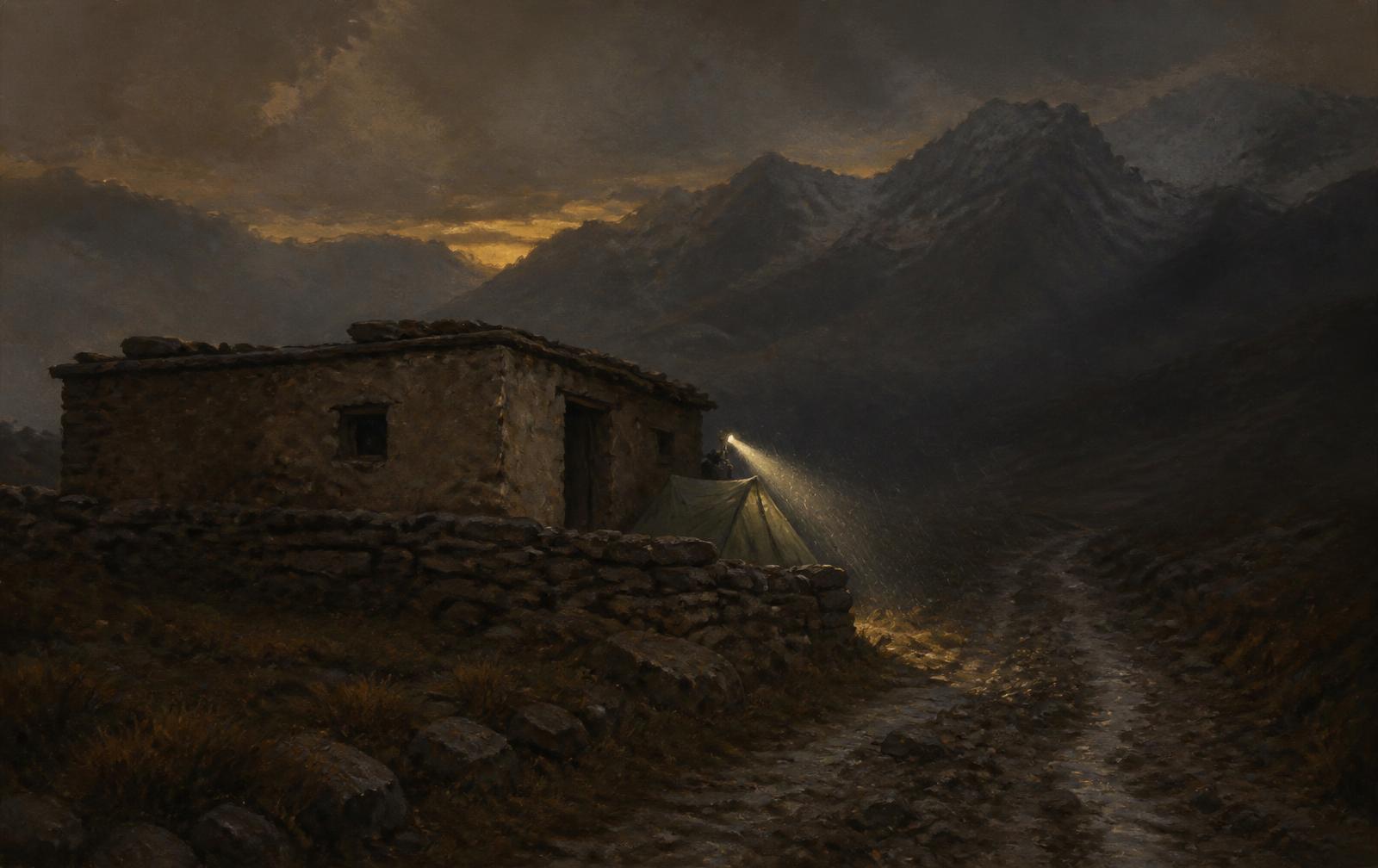
The wrong turn cost them five kilometres and the daylight. They had one head torch between them because Ross had lost his, somehow, a word he uses without elaborating. They walked to the end of the track without finding anywhere to camp, turned round, and put the tent up behind an abandoned building. Behind the building was a locked outside toilet that bubbled all night.
"We were like, is there some kind of toilet ghost"
Twenty-five kilometres, 1,500 metres up, 1,700 down, nearly twelve hours, half of it in rain. They lay in their sleeping bags and talked about whether to carry on. Ross had picked something up from ultra cycling, where the riders say never scratch at night. So they didn't decide. They ate an enormous meal and went to sleep at 4,000 metres, where Ross had been waking himself each night, his breathing slowing as he drifted off until his body jolted him back for air.
So they didn't decide. They ate an enormous meal and went to sleep.
In the morning the sun was out and children were walking to school past the tent. The choice was sixteen kilometres out to a bus that might take twelve hours back to Huaraz, or four more days on the chance they'd be better than the first three. They went on because they'd got this far. That turned out to be the crux. The packs got lighter with every meal. Ross's stomach settled. The world, Bodil says, was sunny again.
I put it to Ross that, on the evidence of that day, it's not obvious what he was contributing. He takes it well. He'd only half read the guidebook, he says; if Bodil had read it, she'd have known which way to go. Then he says something more careful. When one of them has a bad day, they don't take it out on the other. Someone carries a bit more, or they go a bit slower. It isn't anyone's fault. It's just life.
The mountain
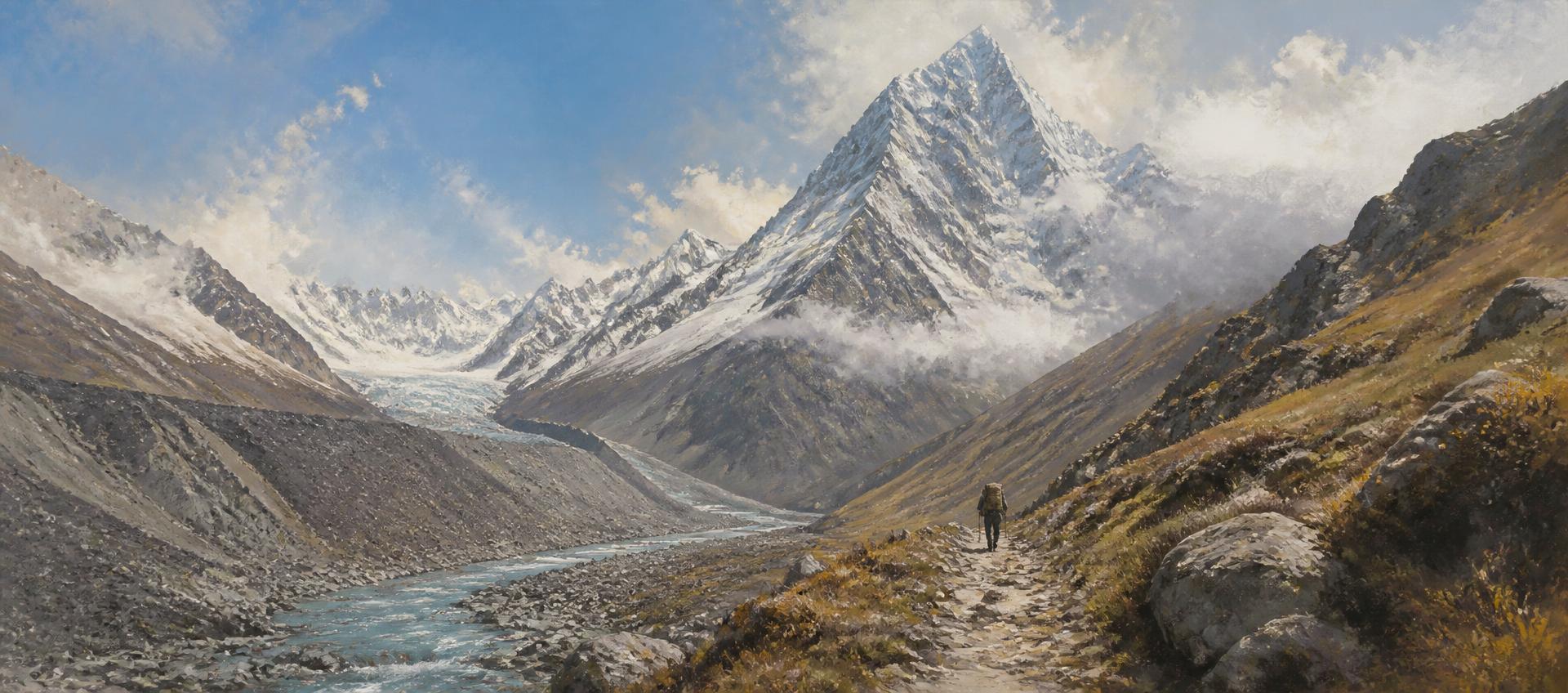
Alpamayo is the one people call the most beautiful mountain in the world, and it's the reason the route has a name. They saw it on the fifth morning, coming up beside a river through a valley grazed to nothing by sheep and alpaca — "like the grass had had a number one buzzed across it" — and it grew out from the mountains in front as the cloud peeled back. Ross describes the ice on its face as feathered, stripes of snow in a perpetual slow-motion fall. You can see who the writer is in this relationship.
But the mountains that stopped them were the ones they hadn't planned for. Turning right over a comparatively modest pass of 4,300 metres, they looked back to find the three Pucahirca peaks rising behind them, bulbous and serrated with snow. Ross kept saying it would rival Patagonia. Bodil kept saying she couldn't believe the world was big enough to fit these in.
"I sometimes couldn't believe that the world is so vast to have places like this in it."
There was a day, too, climbing through hundreds of metres of hand-walled terracing at 4,000 metres, quinoa paddies above the ruins of a settlement of several hundred houses. Ross grew up passing shielings in the Scottish hills and wondering what those lives were like. Here the valleys below the ruins are still lived in: thatched roofs, mud walls, no electricity, a footpath to the door, and a market that's a day or two away. He doesn't draw a conclusion from that. He just says it was an eye-opener.
Day four, mid-morning
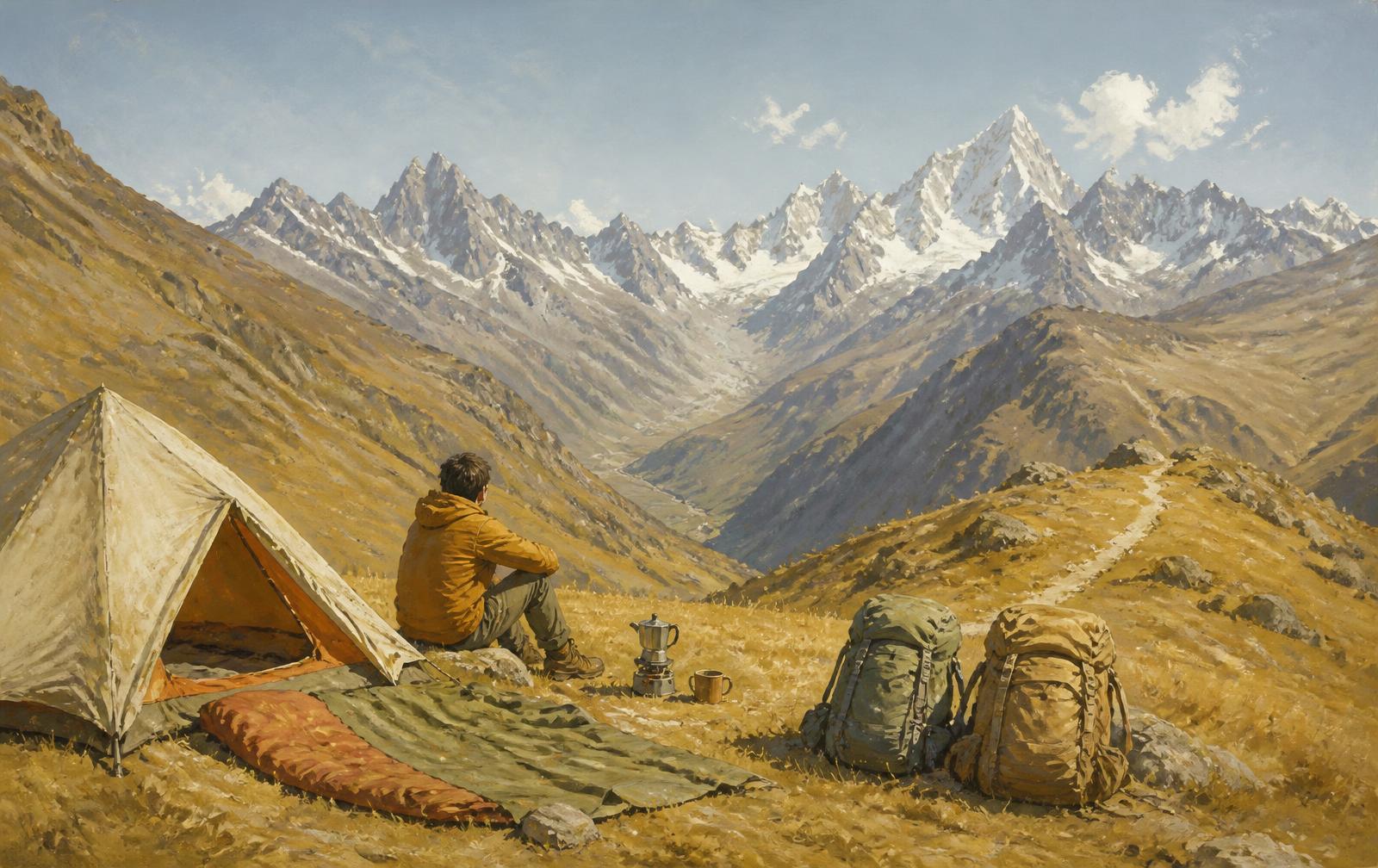
The moment they'd both go back to isn't a summit. It's day four, mid-morning, a coffee stop on a pass with the tent spread out to dry. Bodil hadn't washed in days and hadn't brushed her hair. There was no signal and wouldn't be for another three days. She sat in the sun drying her sleeping bag and thought, I'm so happy we're doing this.
I ask what she got from it that something easier wouldn't have given her.
"Confidence. That we can rely on ourselves. That you can go into these places, look after yourself, feed yourself, and move through them."
The packs, she reminds me, weigh less every day.
You already know it, but you can actually do it, so just crack on.
Written by
Rob Savin
Founder, Big Trail Adventures
Rob writes the Big Trail Adventures journal and talks to walkers and runners about the trails they've just come home from.
Also from the trail journal.
The Smell Is Not a Problem
Beth Langley has fastpacked the Tour du Mont Blanc twice. The second time she had company, better legs and one t-shirt fewer.
The Shore Looked Easier
Kit Birks walked 5,000 miles from the top of Norway to Greece. The day that nearly ended it began with a shortcut.
The Long Way Home
Elsey Davis ran the whole edge of Cornwall and back to Land's End in six days. The record was never really the point.