
Notes from our trail journal
The Bench, the Stream and the Fox
Seven days, an eleven-kilo pack and a first go at wild camping. Rick Clark on what the Pembrokeshire coast does to an ultra runner who assumed it would be easy.
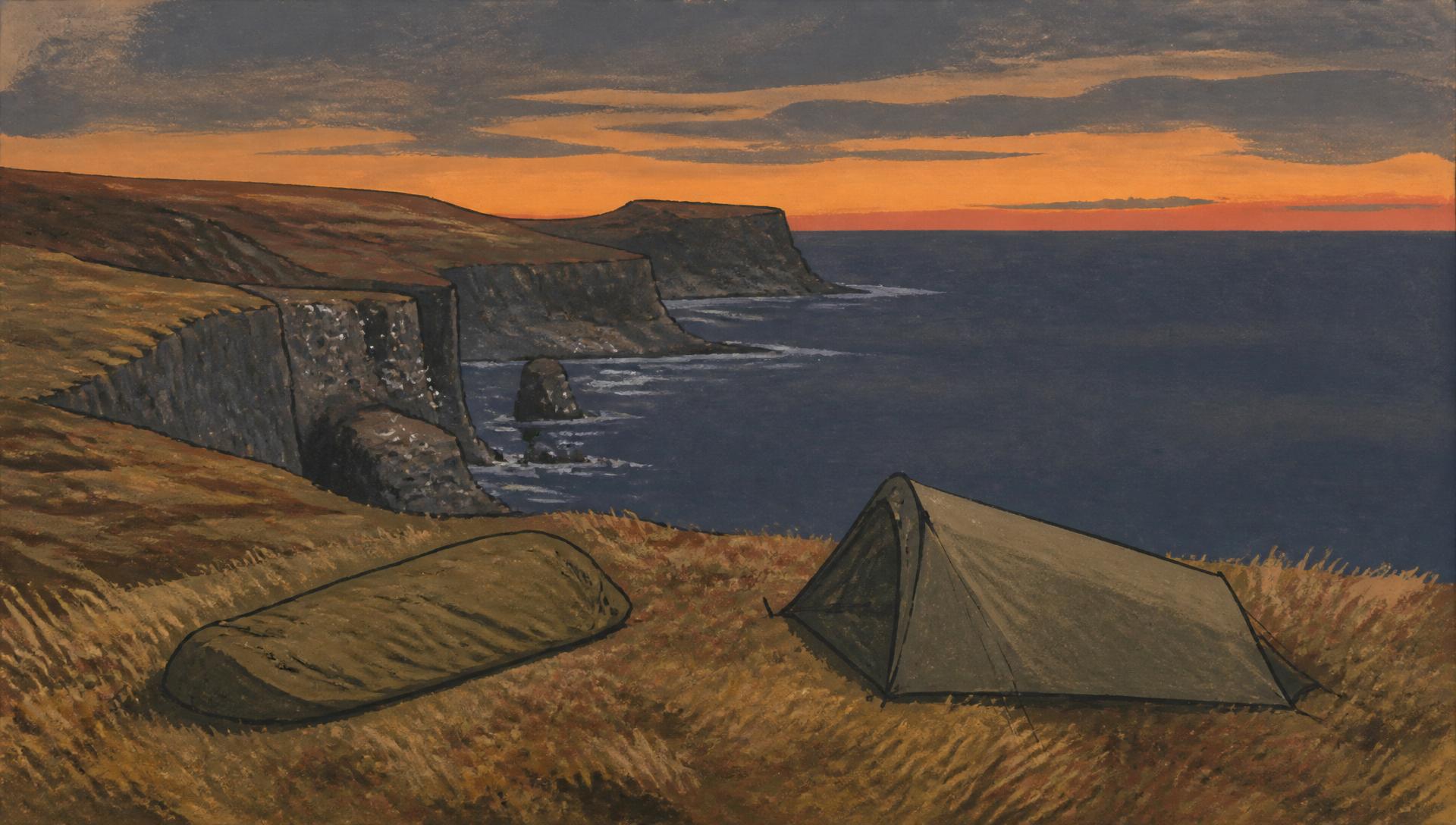
The first night out is on the Castlemartin Range. Rick Clark's son is in the tent. Rick is in a bivvy bag beside it, twenty metres or so from the cliff edge, listening.
"You hear the various coughs of the birds on the cliff, and the slight wash of the waves breaking on the shore below."
He is from Barnoldswick, a landlocked bit of Lancashire, and he says he is not that used to the sea. On this walk it never leaves him. It's on his left for seven days, and at night it's the thing he falls asleep to. He describes it as a flow rather than a noise. Never irritating. Just part of what you're doing.
They'd set off from Amroth the afternoon before, a taxi from the station, a short hot four miles to Saundersfoot and a B&B, past pubs full of people drinking in the sun. Rick remembers the sweat starting almost immediately, and the odd feeling of moving past people who are staying put. Day two is the real start: twenty-five miles, a big pack, hot sun, feet beginning to complain, and at the end of it a camp to set up for two, because his son had never wild camped before.
"It's a lot easier looking after yourself than it is looking after two people," he says. His son turned back after that.
How hard could walking be?
Rick is an ultra runner. This matters, because it's the reason he assumed the Pembrokeshire Coast Path would be fine. He'd run further than this without stopping. How hard could walking be.
"It wasn't as simple as I'd thought, honestly."
He came into it with an Achilles that had been playing up, made worse, he thinks, by the heel of his trainers. He'd switched to a lower-drop shoe before setting off. For the first day he was stopping every two miles to stretch it out, quietly wondering whether he was going to have to pull the plug. Then it settled and didn't trouble him again. His body, in his phrase, grew into the walk. The hills that were a grind on day two were nothing much by day six.
What I notice, listening to him, is how much of this is process. He's a structured person and he says so. Ultra running has taught him that the evening is a sequence: water on to boil before the tent is even up, kit out, eat, sleep. The morning is the reverse, with feet dealt with first. He says the last two nights ran far more smoothly than the first two, and you can hear that he enjoyed the improvement as much as the scenery.
And yet. Before an ultra he looks after his feet obsessively. Before this, he didn't. By Milford Haven on day three they'd had enough, and he went into a chemist looking for tape and came out with a tube of CCS foot cream instead. He put it on every evening after that.
"Next time I go wild camping, I will make sure I've got a full tube of that."
I've heard a lot of gear advice on this podcast. This is the first time the headline item has been foot cream from a high-street chemist in Pembrokeshire, discovered halfway through a walk by a man who runs hundred-mile races. I found it oddly reassuring.
The relentlessness of it
He carried around eleven kilos, including four or five days of dehydrated food, a good deal of which came home with him. Water was the thing to watch, particularly on the stretch between Castlemartin and Pembroke in the heat, where a café at West Angle Bay was the only real chance to fill up. After that he got savvier, topping up at every opportunity, carrying up to three litres into each night's camp.
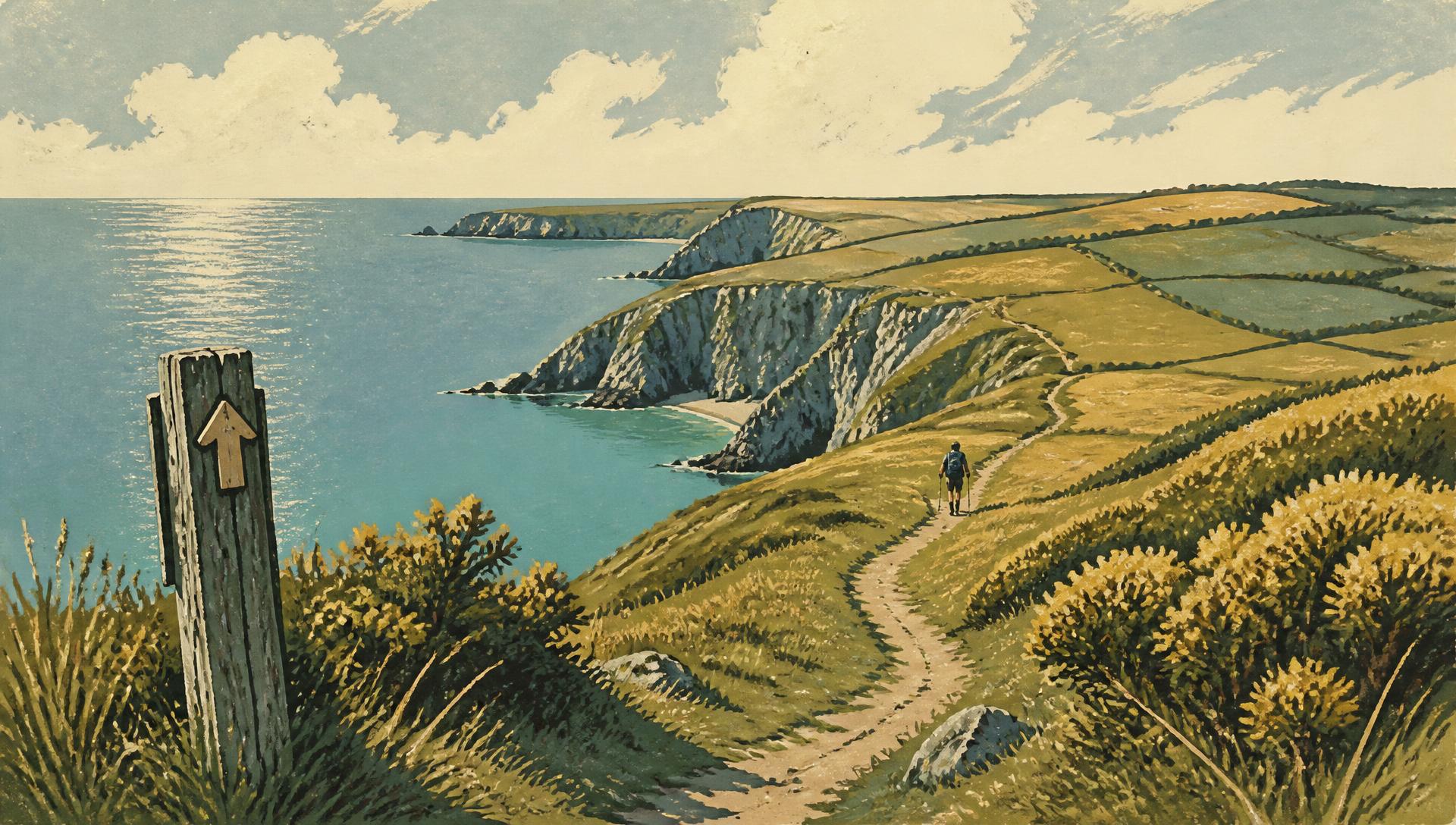
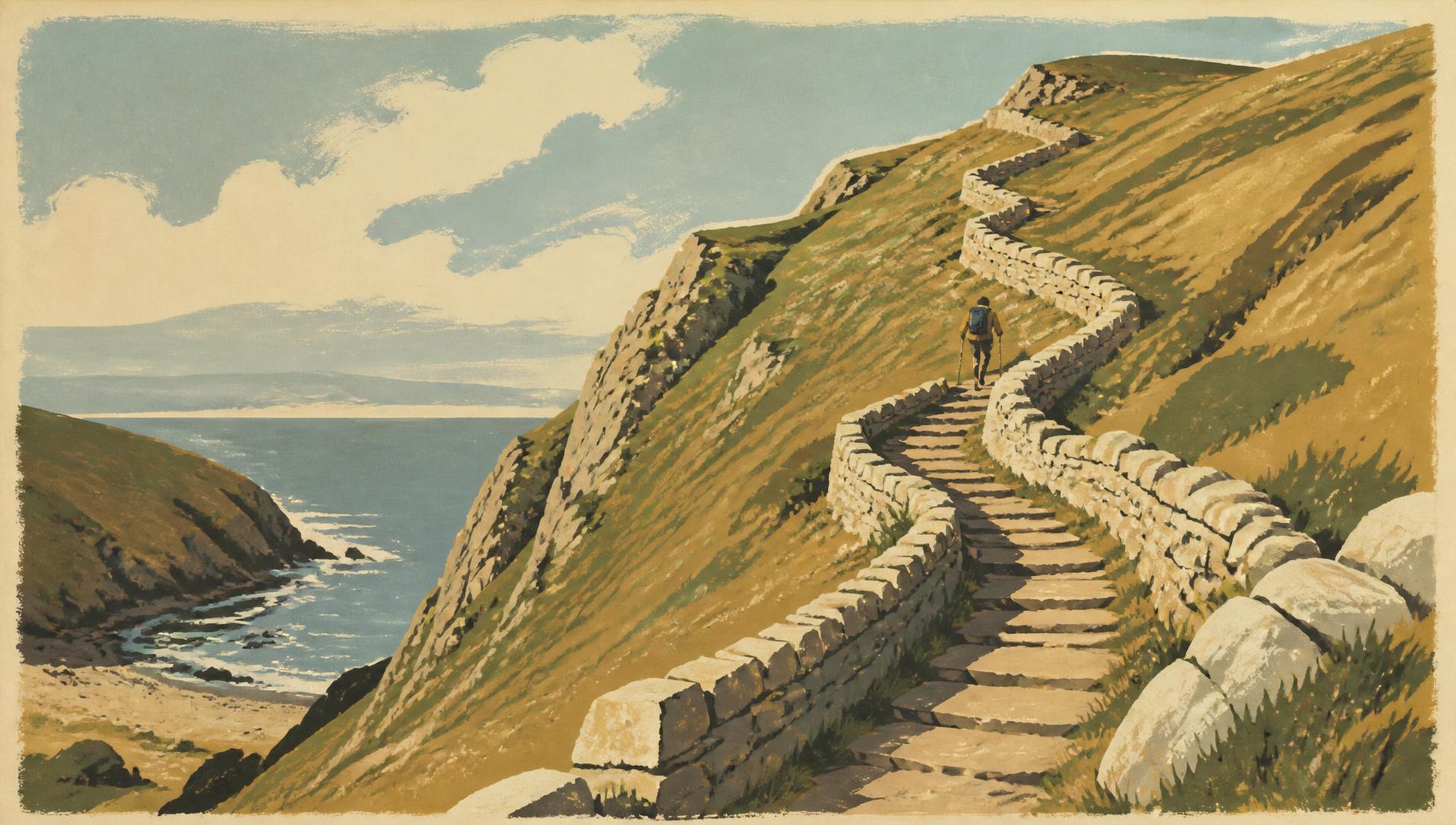
The path underfoot is not technical. Grass, sand, shale, shingle, a bit of road, one place where hands are needed. Poles help. It's the relentlessness of it that gets you, the meandering and contouring around field edges and clifftops, and the odd section that turns out to be a roller coaster. Freshwater East to Angle was one. The Gribin above Solva was another, a big up and over he hadn't seen coming before dropping into the third night's camp.
The people, he says, were the other constant. A professor who grew up two miles from Barnoldswick. A Dutch woman on her fourth lap of the Wales Coast Path. A Belgian couple over fish and chips at the Shed in Porthgain. A bus driver who used to work with the lifeguards and talked him through the next five miles of inlets and bays before he'd even stepped off. And one woman with a charity placard who was, in Rick's careful phrasing, slightly too loud for the occasion.
I ask him about the silence, too. He and his son walked most of those first two days without saying much. He tells me about a running friend he'd covered hundreds of miles with, side by side, talking the whole way, and how strange it was the first time they sat opposite each other in a pub and he actually looked at the man's face.
"Good friends is that you are okay by silence and bound by silence."
The bench, the stream and the fox
He was nervous about the camping. He'd never done it before this trip, and he is aware that not everyone approves. So he pitched late and left early, walking by six most mornings, and never once saw anyone at a spot where he'd slept. What he got in return was the thing he now talks about most: the chance to stop somewhere he hadn't planned to stop, walk down to a bay like Pwll Deri, and watch darkness come in over it.
"That's something that just walking through the area, you don't get."
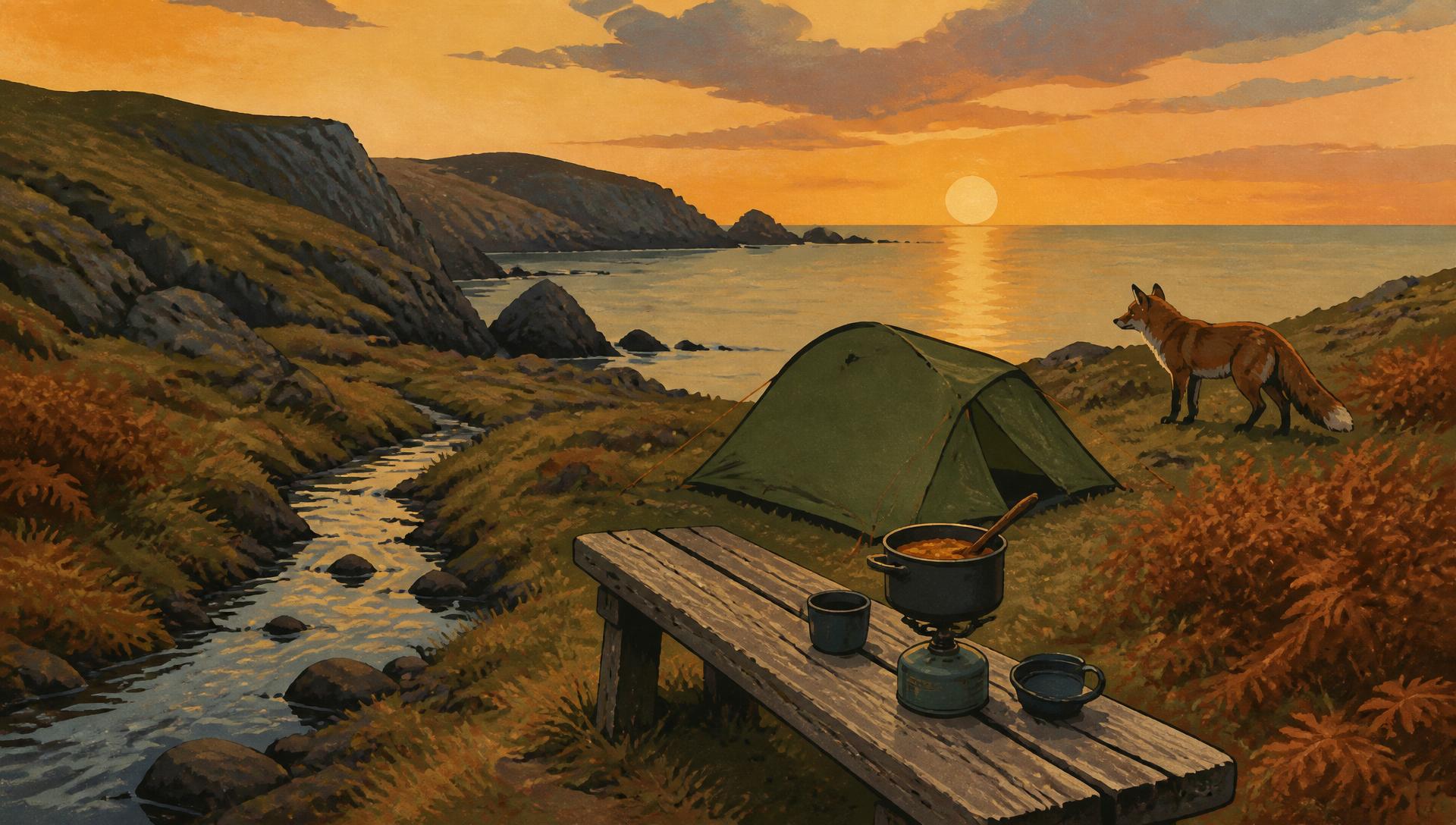
When I ask him to take me back to one place, he doesn't hesitate for long. It's one of the last nights. He'd arrived early, around half five. There was a bench. A view west, straight into where the sun was going to go down. A little stream running past. Shelter.
His first reaction, he admits, was suspicion. Somewhere this good could not be allowed. "I thought, something's going to happen here, somebody's going to turn up and tell me to move on."
Nobody did. He cooked a curry on the bench and read. A fox came up while he was eating, sniffed around the pot, walked over to the tent, checked it out from a few feet away, and moved on.
Rick Clark
Rick Clark is an ultra runner from Stockport who is working his way through every National Trail. He walked the Pembrokeshire Coast Path south to north in a week, wild camping for most of it.
What is the worst that can happen? You may have a broken sleep for a little bit.
Written by
Rob Savin
Founder, Big Trail Adventures
Rob writes the Big Trail Adventures journal and talks to walkers and runners about the trails they've just come home from.
Also from the trail journal.
The Smell Is Not a Problem
Beth Langley has fastpacked the Tour du Mont Blanc twice. The second time she had company, better legs and one t-shirt fewer.
The Shore Looked Easier
Kit Birks walked 5,000 miles from the top of Norway to Greece. The day that nearly ended it began with a shortcut.
The Long Way Home
Elsey Davis ran the whole edge of Cornwall and back to Land's End in six days. The record was never really the point.