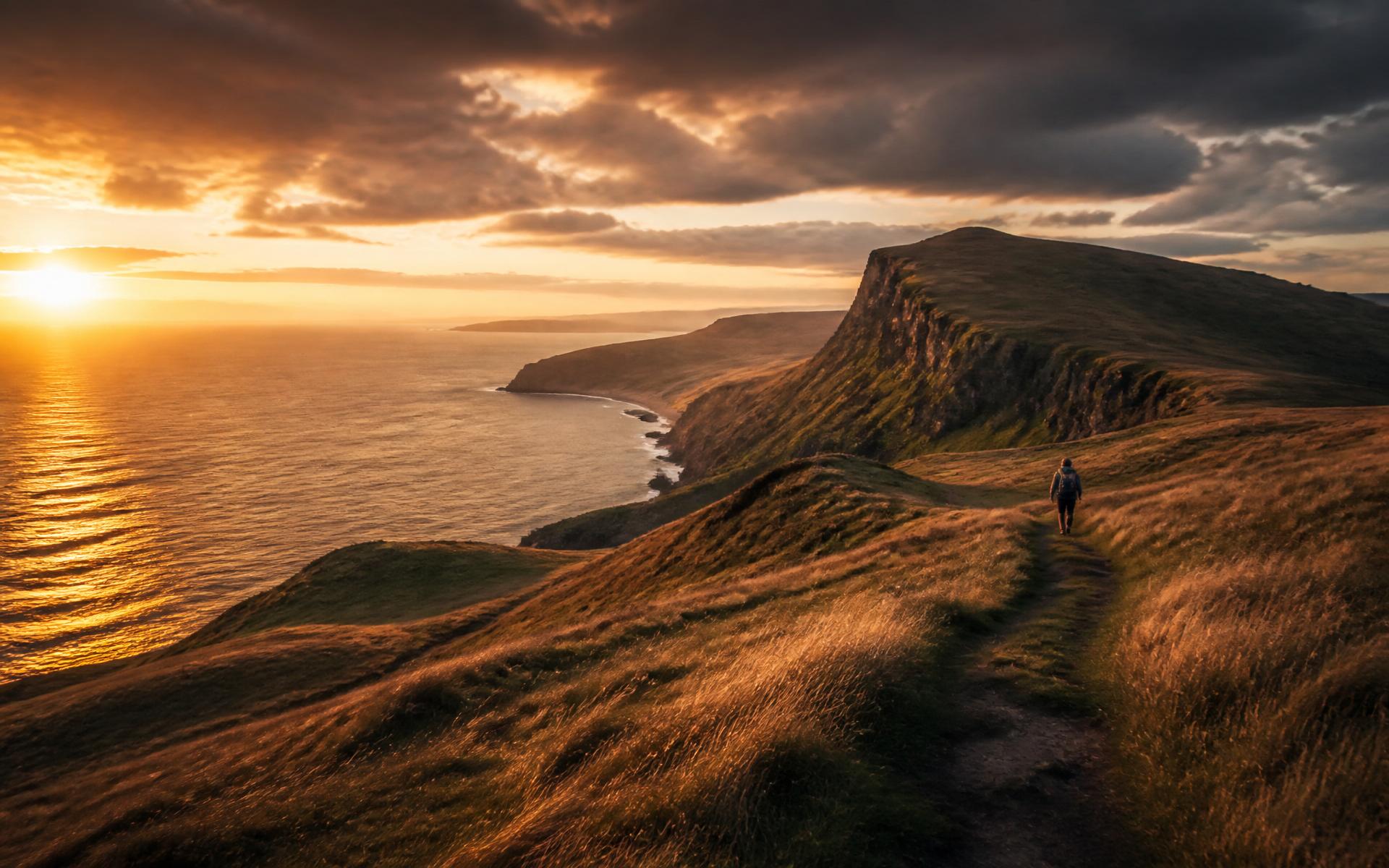
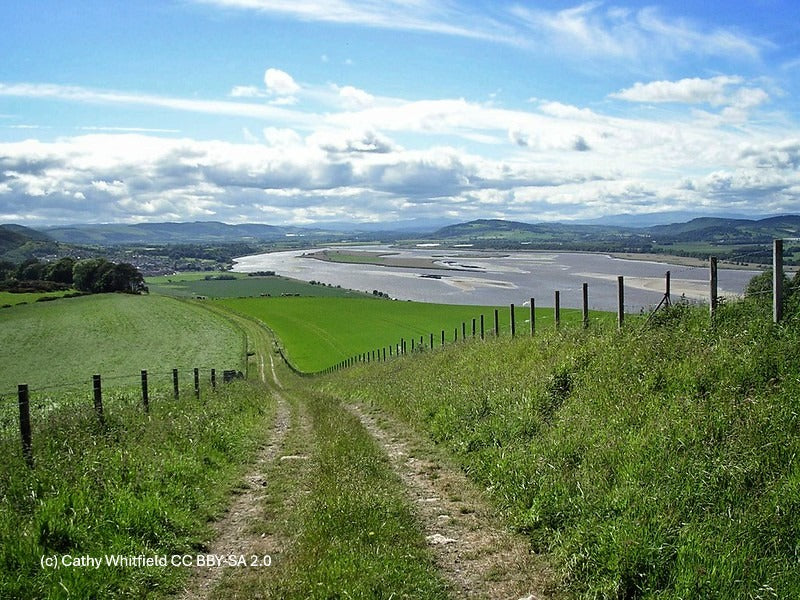
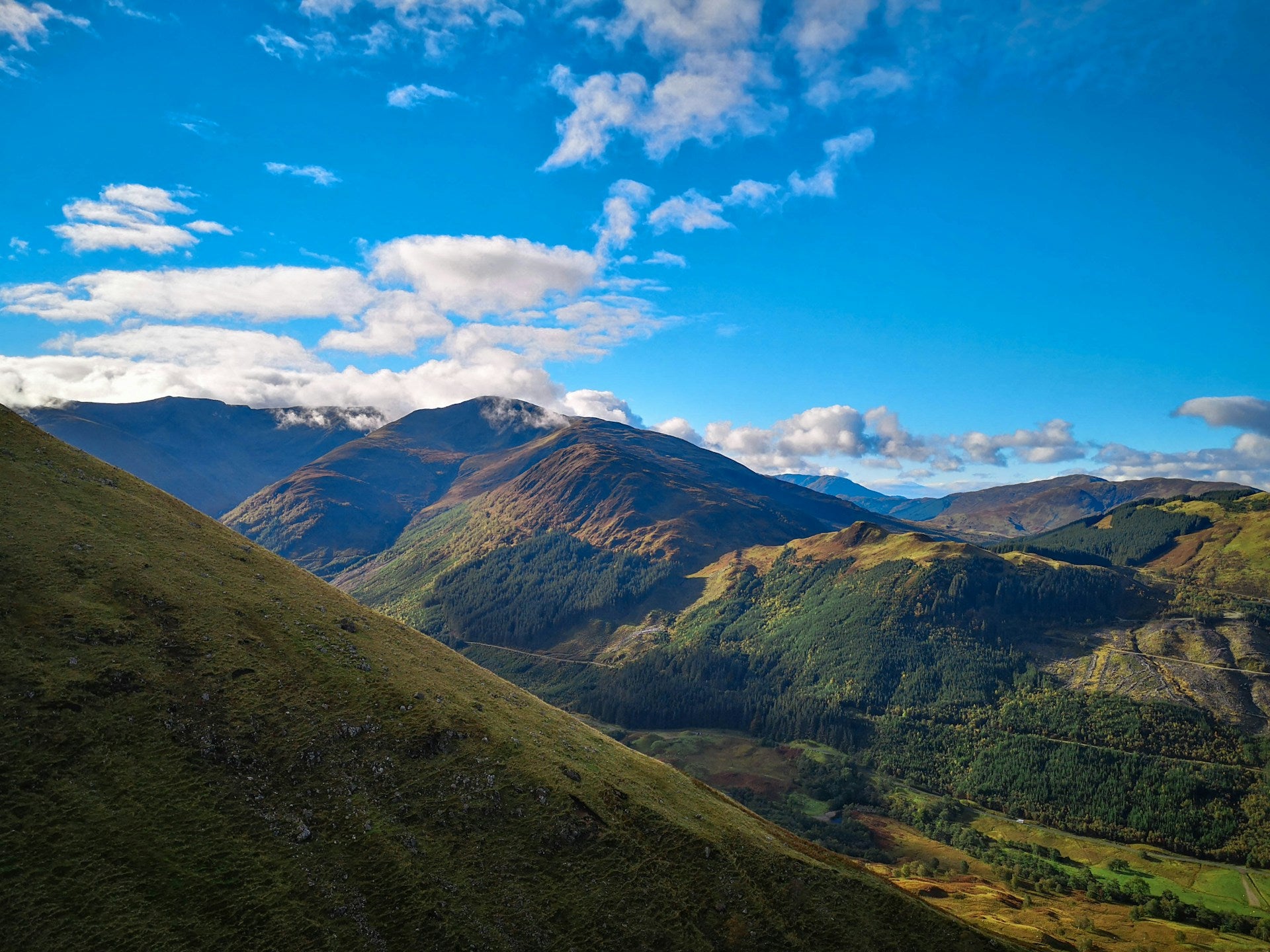
Scotland is the size of South Carolina with the population of Minnesota, and a fifth of its land is walkable common right. The country was walked long before it was mapped — by drovers moving cattle to the Falkirk trysts, by pilgrims to St Andrews and Iona, by reivers, whisky smugglers, and post-Culloden crofters cleared to the coast. The paths they wore are the paths you walk today.
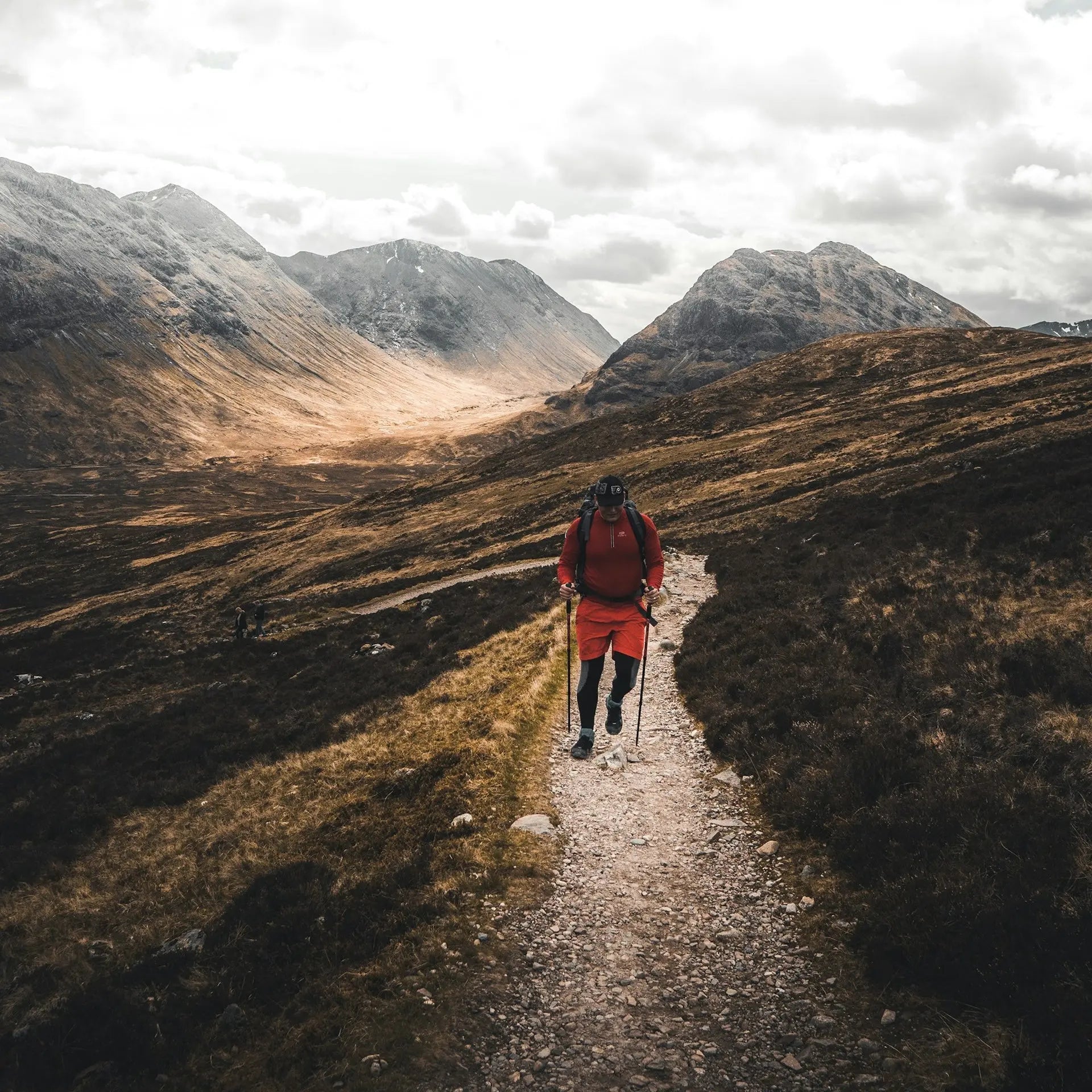
What that adds up to, practically, is a network of Great Trails maintained by NatureScot — long-distance routes that stitch together coastline, moor, forest, and glen with a bed at the end of every day. From the Fife Coastal Path in the east to the West Highland Way through the mountains, and the island crossings of Skye, Mull and Arran, there is a trail for every kind of walker.
And when you stop walking, you stop somewhere worth stopping. A pub with a fire, a village of pantiled cottages, a distillery that opens at four. Scotland rewards slow travel because Scotland is slow country.